


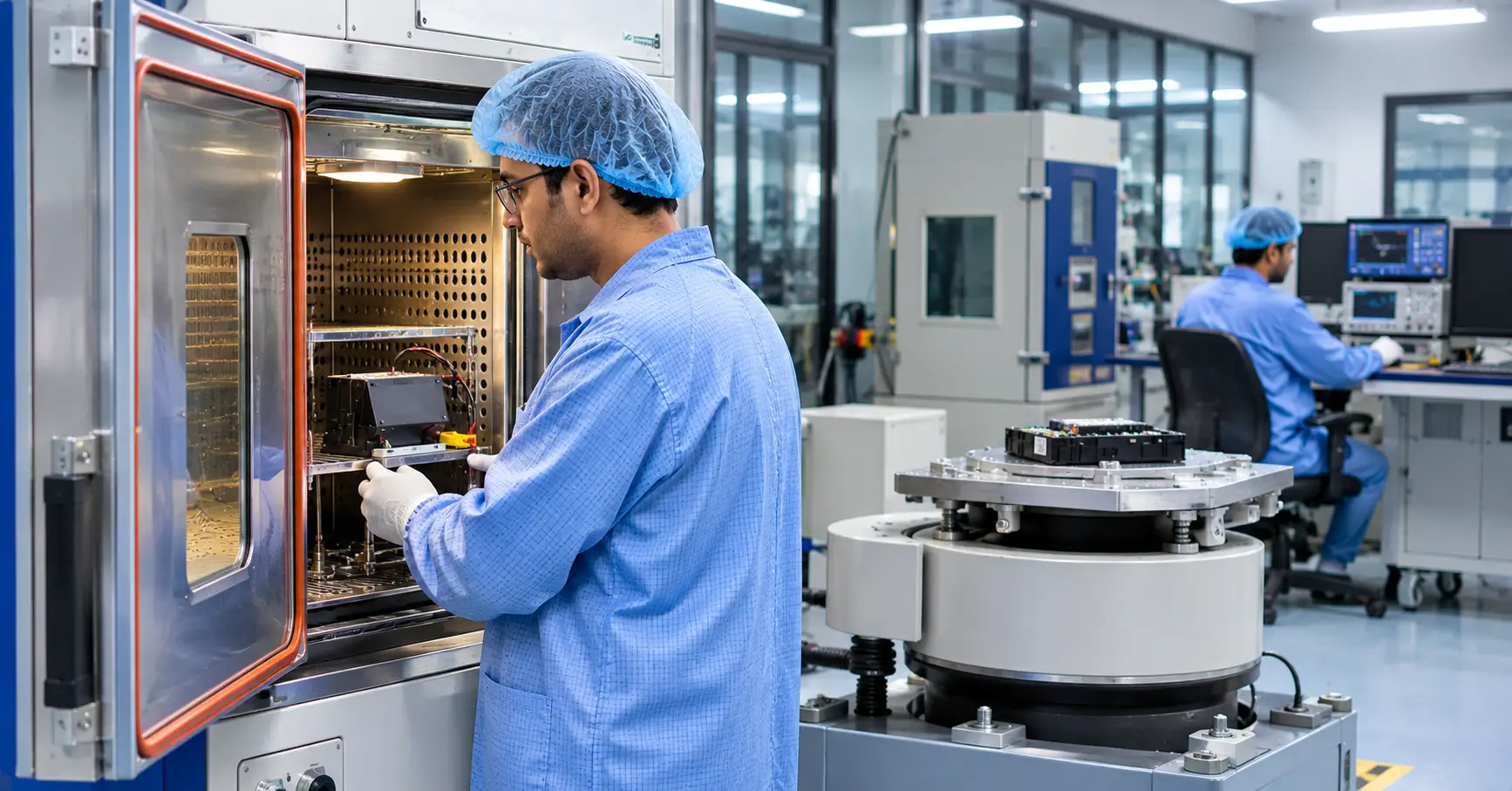
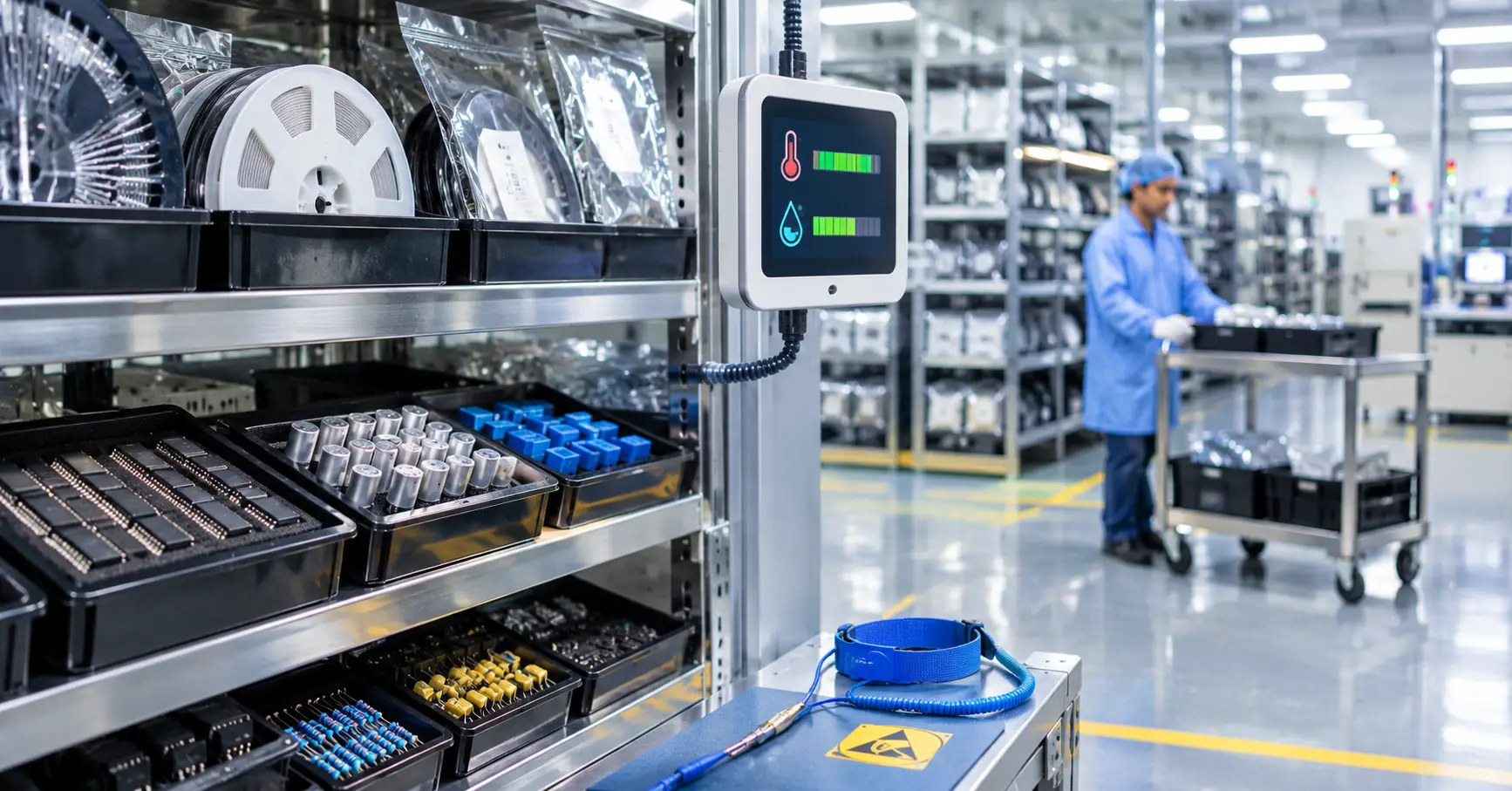
Electrostatic discharge (ESD) can happen without warning. A person walking across a floor, handling a material or touching an electronic assembly can create or transfer an electrostatic charge that may not be visible or even felt.
In electronics manufacturing, that invisible event can matter. Modern electronic components and assemblies can be sensitive to electrostatic discharge, and damage may not always appear immediately. A component can pass through production and only show a failure later in testing, operation or field use.
This is why ESD control in electronics manufacturing is treated as a structured manufacturing requirement rather than simply a matter of preventing static shocks.
What Is ESD?
Electrostatic discharge is the sudden transfer of electrostatic charge between objects at different electrical potentials.
Static charge can build up through contact and separation between materials. The amount of charge generated can depend on factors including the materials involved, the way they interact and environmental conditions.
When that charge is discharged through or around an electronic component, it can potentially cause damage or disturb its electrical characteristics.
According to the EOS/ESD Association, ESD damage can be either immediate or latent. A component may fail during manufacturing, or the damage may remain undetected and contribute to premature failure later.
Why ESD Control Matters in Electronics Manufacturing
Electronics manufacturing involves the handling of components, PCBs, assemblies and finished electronic products at multiple stages.
Components may be received, inspected, stored, transported, placed on PCBs, soldered, tested, assembled and packaged. ESD exposure can therefore occur at different points in the manufacturing and handling process.
An effective ESD control programme aims to reduce the likelihood that electrostatic charges will reach sensitive electronic parts at damaging levels.
This matters for manufacturers because an ESD-related failure can create more than an immediate rejected unit. Depending on where the issue occurs, it can contribute to rework, yield loss, investigation requirements, field failures and customer quality concerns.
What Is an ESD Control Programme?
An ESD control programme is a documented system for establishing, implementing and maintaining controls that protect ESD-sensitive electronic parts, assemblies and equipment.
ANSI/ESD S20.20 is one of the principal standards used for establishing such a programme. The current 2021 edition provides administrative and technical requirements for an ESD control programme and is technically equivalent to IEC 61340-5-1.
The standard applies to activities that manufacture, process, assemble, install, package, label, service, test, inspect, transport or otherwise handle electrical and electronic items susceptible to ESD damage.
How ESD Protection Works on the Production Floor
ESD control is not based on one piece of equipment. It is a combination of controls that work together to manage electrostatic charge.
Key elements can include:
- Grounding and equipotential bonding
- ESD-protected work areas
- Personnel grounding systems
- Static-control flooring and footwear
- ESD-safe work surfaces
- Static-dissipative or conductive materials
- Ionisation where required
- ESD-protective packaging
- Controlled material handling
- Training and compliance verification
The exact controls required depend on the sensitivity of the products being handled and the manufacturing environment.
Grounding and Equipotential Bonding
Grounding is one of the fundamental principles of an ESD control programme. It provides a controlled path for managing unwanted electrical charge.
ANSI/ESD S20.20 requires conductors within the ESD-controlled environment, including personnel where applicable, to be bonded or electrically connected to a known ground or an appropriate grounding system. The objective is to maintain an equipotential environment rather than allowing uncontrolled differences in electrical potential.
Grounding, however, is only one part of ESD control. Different materials and objects behave differently, so the overall programme needs to account for conductors, insulators, people, equipment and the products being handled.
ESD Protected Areas on the Production Floor
An ESD Protected Area (EPA) is an environment in which defined ESD control measures are implemented to protect sensitive electronic items.
The EOS/ESD Association recommends identifying and defining the EPA as part of establishing an ESD control programme. The appropriate level of control depends on the sensitivity of the electronic parts and assemblies being handled.
Within an EPA, personnel, workstations, tools, equipment and materials need to be managed according to the applicable ESD control requirements.
This is important because protecting a component at one workstation is not enough if it is exposed to uncontrolled static charge while being moved to another production area.
Personnel Are a Critical Part of ESD Control
People can accumulate electrostatic charge during normal movement and interaction with materials. That makes personnel control an important part of an ESD programme.
Depending on the facility’s control system, this can involve measures such as:
- Wrist-strap grounding systems
- ESD footwear and suitable flooring systems
- ESD garments where required
- Controlled handling procedures
- Personnel grounding verification
- ESD awareness and training
Training matters because even well-designed ESD controls can become ineffective if personnel do not understand the requirements or consistently follow them. The EOS/ESD Association identifies training and compliance verification as important components of an ESD control programme.
Why ESD-Safe Materials and Packaging Matter
Materials used around ESD-sensitive products need to be selected and controlled carefully.
Work surfaces, containers, carts, packaging and other handling materials can influence how electrostatic charges are generated, retained or discharged.
ESD-protective packaging is particularly important when electronic components or assemblies leave a controlled production area. The EOS/ESD Association identifies protective packaging for transport and storage as a fundamental part of protecting ESD-sensitive items.
In other words, ESD protection should not stop at the production workstation. The product needs appropriate protection throughout relevant manufacturing, storage and handling stages.
Ionisation and Charge Neutralisation
Not every material can simply be connected to ground. Some process-essential insulators cannot dissipate their charge through grounding in the same way conductors can.
Where appropriate, ionisation can be used to neutralise electrostatic charges on such materials. ANSI/ESD S20.20 recognises ionisation as one of the control approaches for process-essential insulators that cannot be grounded.
Whether ionisation is required depends on the manufacturing process, materials and ESD risk assessment.
ESD Control During PCB Assembly
PCB assembly involves multiple stages where ESD control can be relevant, including component handling, placement, soldering, inspection, testing and movement between processes.
Surface-mount components can be particularly small and densely integrated into modern electronic assemblies. Protecting components during storage, preparation and assembly therefore needs to be part of the overall manufacturing process.
ESD control should work alongside other PCB quality measures rather than replacing them. Visual inspection, AOI, ICT, functional testing and reliability evaluation address different aspects of PCB quality, while ESD controls help prevent electrostatic damage during handling and manufacturing.
Explore PCB Assembly Quality Testing at OEL
How ESD Control Supports Manufacturing Quality
ESD control is ultimately a form of process protection. It helps reduce one category of risk that can affect electronic components and assemblies during manufacturing.
A well-managed programme can support:
- Protection of ESD-sensitive components
- Reduced risk of ESD-related defects
- More consistent production handling
- Better control of manufacturing environments
- Reduced potential for latent ESD damage
- Stronger compliance and audit readiness
It should not, however, be treated as a guarantee that every electronic failure is prevented. ESD control is one component of a broader manufacturing quality system.
How ESD Compliance Is Verified
An ESD control programme needs ongoing verification. Establishing an ESD Protected Area once is not enough; controls need to remain effective as equipment, materials, processes and personnel change.
Compliance verification can involve checking relevant ESD control equipment and systems according to the facility’s documented programme and applicable requirements.
ANSI/ESD S20.20 includes administrative requirements around compliance verification, while supporting ESD Association guidance addresses methods for evaluating ESD control items.
This makes auditing and verification an ongoing part of ESD management rather than a one-time certification exercise.
ANSI/ESD S20.20 Certification and What It Means
ANSI/ESD S20.20 certification demonstrates that an organisation has established an ESD control programme meeting the applicable requirements of the standard.
It is important to understand what the certification means. It is not simply a statement that a factory has ESD-safe flooring or wrist straps. The standard addresses the broader ESD control programme, including administrative and technical requirements.
For an EMS customer, ESD certification can therefore be one useful indicator when evaluating whether a manufacturing facility has a structured approach to protecting ESD-sensitive products.
OEL’s ESD Control and Certification
Optiemus Electronics Limited (OEL) lists ANSI/ESD S20.20 among its certifications and compliance standards. OEL states that the standard supports protection of sensitive electronic components, assemblies and equipment from ESD damage.
OEL’s quality framework also includes IQC, PQC and OQC across production stages, providing a broader quality-control structure around its manufacturing operations.
Its manufacturing facilities in Noida include ESD-S20.20 certification listed for Unit-1, alongside its electronics manufacturing infrastructure.
Explore OEL’s Quality Assurance
What Brands Should Ask an EMS Partner About ESD Control
When evaluating an Electronics Manufacturing Services partner, brands should look beyond the presence of an ESD logo or certificate.
Useful questions include:
- Does the facility have a documented ESD control programme?
- Is the relevant production area covered by an ESD Protected Area?
- How is personnel grounding managed and verified?
- How are ESD-sensitive materials stored and transported?
- How are ESD control items monitored and verified?
- What ESD training is provided to production personnel?
- Is the facility certified to ANSI/ESD S20.20?
- How does ESD control integrate with the broader quality system?
The answers help determine whether ESD protection is embedded into the manufacturing process rather than treated as an isolated facility feature.
Conclusion
ESD control in electronics manufacturing is about managing an invisible but potentially significant source of product risk.
Effective protection requires more than grounding a workstation. It involves understanding product sensitivity, establishing controlled production areas, managing personnel and materials, using appropriate protective equipment and packaging, training employees and continuously verifying that the controls remain effective.
ANSI/ESD S20.20 provides a structured framework for establishing and maintaining an ESD control programme for organisations handling susceptible electronic parts and assemblies.
For electronics manufacturers and their customers, ESD control should therefore be viewed as part of the wider manufacturing quality system. When it is integrated with production, inspection, testing and quality processes, it provides a more controlled environment for manufacturing sensitive electronic products.
OEL’s ANSI/ESD S20.20 certification and ESD-controlled manufacturing infrastructure form part of its broader quality and compliance framework for electronics manufacturing in India.
Explore OEL’s Electronics Manufacturing Services
Frequently Asked Questions
What is ESD control in electronics manufacturing?
ESD control is the structured management of electrostatic charge and discharge risks to protect sensitive electronic components, assemblies and equipment during manufacturing and handling.
Why is ESD protection important on a production floor?
Electronic components can be damaged by electrostatic discharge, sometimes causing immediate failure and sometimes creating latent damage that may appear later. ESD controls help reduce this risk during manufacturing and handling.
What is ANSI/ESD S20.20?
ANSI/ESD S20.20 is a standard that provides administrative and technical requirements for establishing, implementing and maintaining an ESD control programme for protecting susceptible electronic parts, assemblies and equipment.
What is an ESD Protected Area?
An ESD Protected Area, or EPA, is an environment in which defined ESD control measures are implemented to protect ESD-sensitive items during manufacturing and handling.
Does OEL have ANSI/ESD S20.20 certification?
Yes. OEL lists ANSI/ESD S20.20 among its certifications and compliance standards, and its Unit-1 manufacturing facility also lists ESD-S20.20 certification.