
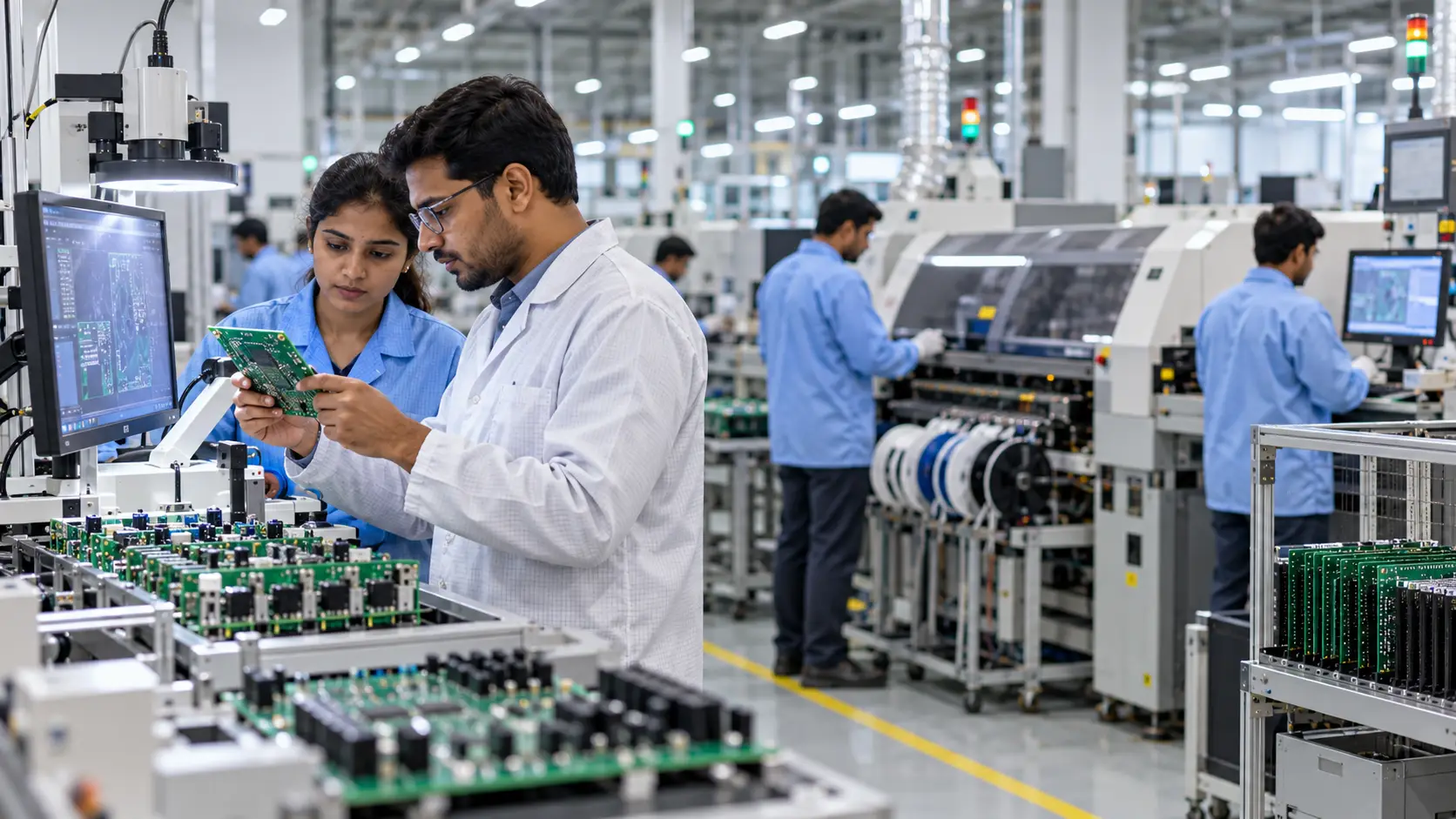
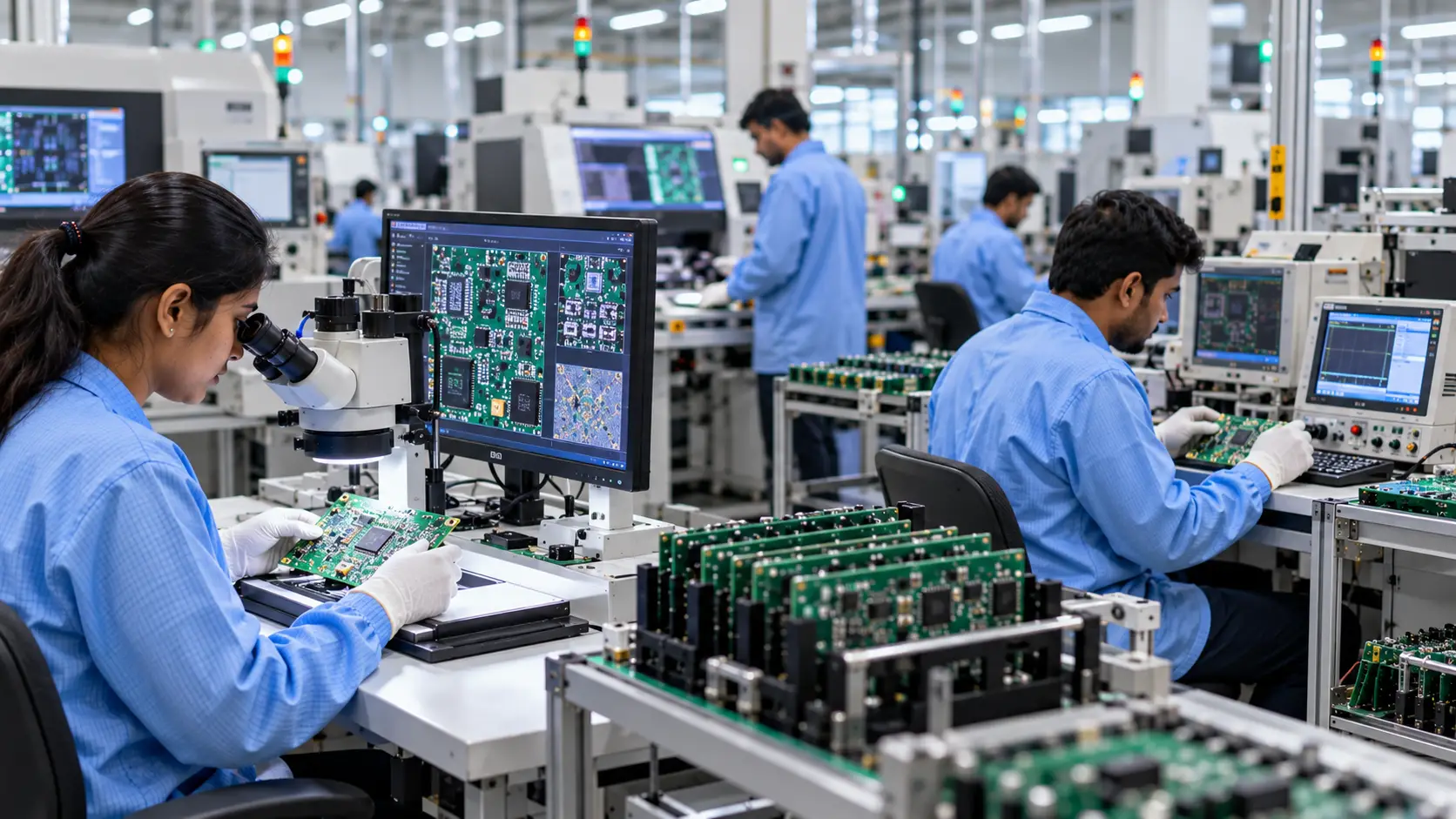
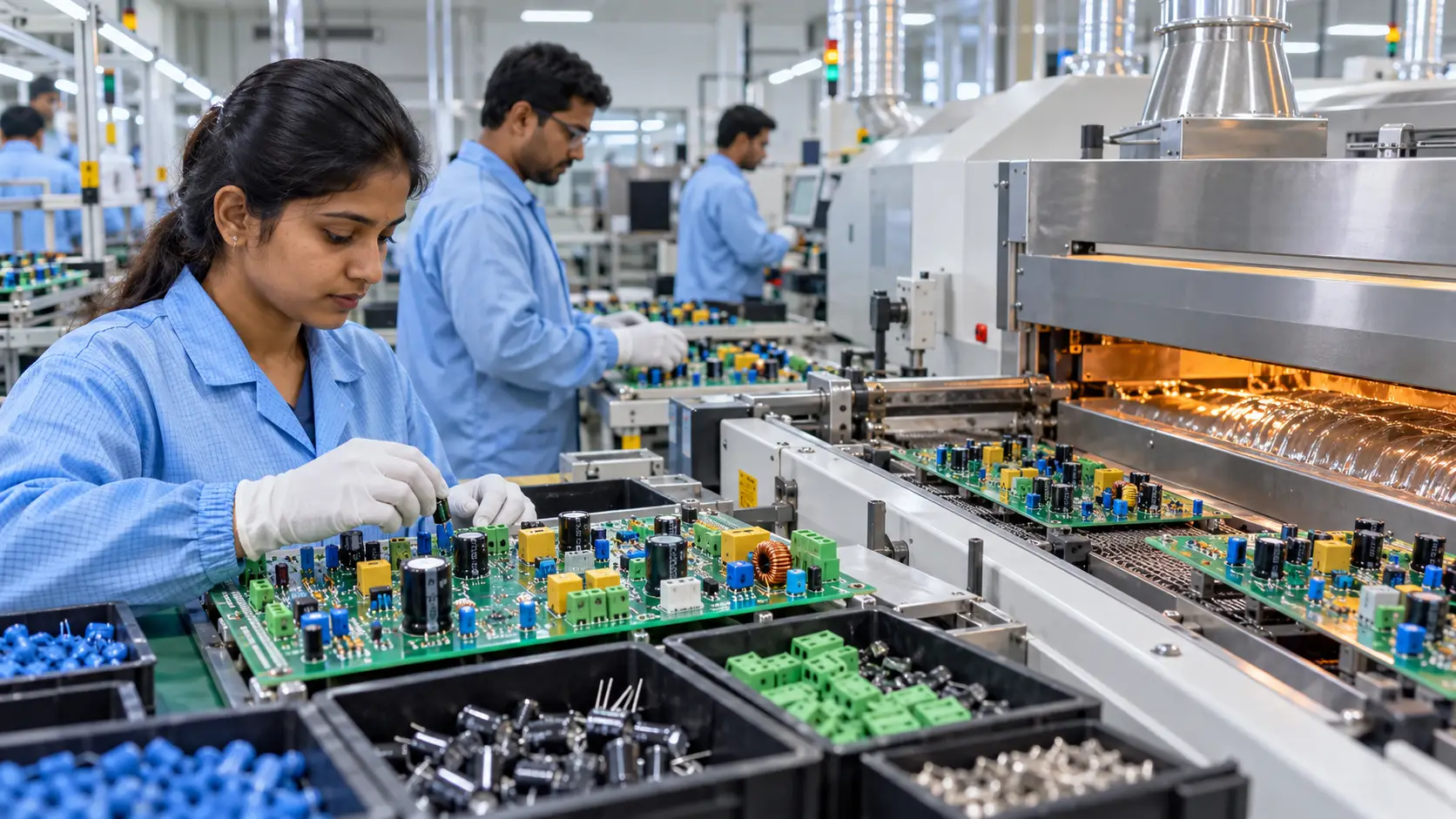
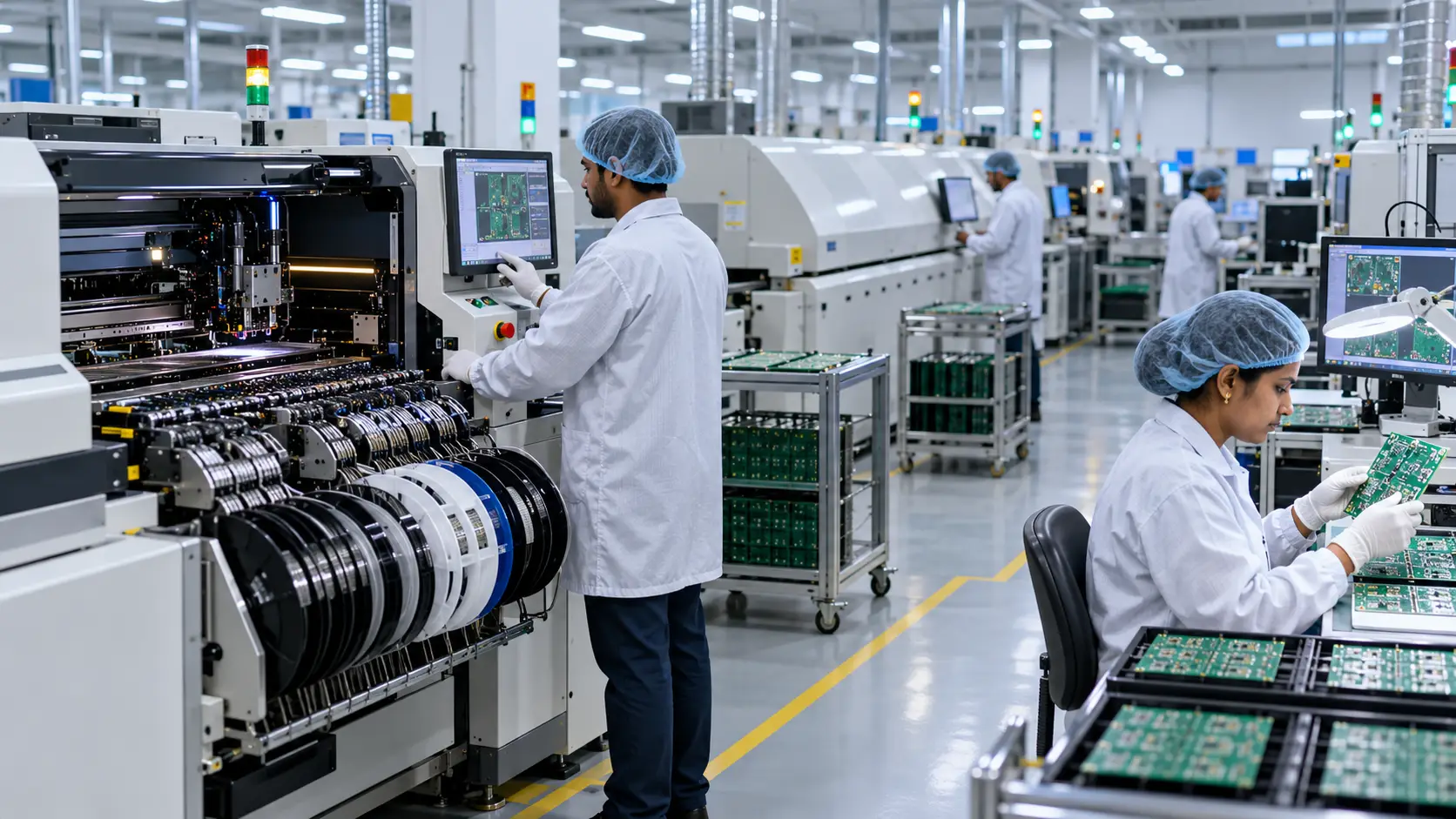
The electronics manufacturing process involves a series of connected activities that transform electronic components, printed circuit boards and product requirements into finished electronic products. While the exact workflow varies by product, a typical process can include component sourcing, manufacturing preparation, PCB assembly, component insertion, inspection, testing, final assembly and packaging.
Each stage contributes to the overall manufacturing outcome. Component availability affects production planning, PCB assembly determines how electronic components are integrated onto the board, testing helps verify the required manufacturing and product conditions, and final assembly brings the different elements of the product together.
Understanding the complete electronics manufacturing process helps businesses evaluate manufacturing requirements, plan production more effectively and assess the capabilities of an electronics manufacturing partner.
What Is the Electronics Manufacturing Process?
Electronics manufacturing is the process of producing electronic products through a coordinated series of manufacturing and assembly activities. These activities can begin with component sourcing and production planning and continue through PCB assembly, testing, final assembly and packaging.
The exact process depends on factors such as product design, components, PCB configuration, production volume and manufacturing requirements. A compact consumer electronic product may require a different manufacturing workflow from industrial or telecommunications equipment.
For this reason, electronics manufacturing should be viewed as a connected production process rather than as a single manufacturing operation.
While the exact workflow can vary depending on the product and its manufacturing requirements, the process can generally be understood through a series of connected stages.
The following stages explain how an electronic product can move from initial manufacturing preparation and component sourcing through PCB assembly, inspection, testing, final assembly and packaging.
1. Product and Manufacturing Preparation
Before regular production begins, the product and its manufacturing requirements need to be understood. This can include reviewing the product design, components, PCB requirements, assembly processes and production objectives.
For new products, New Product Introduction can help establish manufacturing readiness before the product moves into regular production. The process connects product requirements with the manufacturing processes needed to produce the product consistently.
OEL provides New Product Introduction (NPI) as part of its electronics manufacturing capabilities.
2. Component Sourcing and Preparation
Electronic products require multiple types of components, including integrated circuits, resistors, capacitors, connectors and other electronic parts. The components required for production depend on the product design and bill of materials.
Component sourcing and preparation are important because manufacturing depends on having the required components available in the correct specifications and quantities. Components also need to be handled and prepared according to the requirements of the manufacturing process.
The bill of materials provides an important reference for identifying the components required for the product and supporting production planning.
3. PCB Manufacturing and Preparation
The printed circuit board provides the physical and electrical foundation for many electronic products. PCB manufacturing and preparation create the board onto which electronic components will be assembled.
The PCB design determines factors such as component locations, electrical connections, board dimensions and the type of assembly processes required.
Once the appropriate PCB is available for assembly, it can move into the relevant electronics assembly process according to the product’s manufacturing requirements.
4. PCB Assembly
PCB assembly is the stage where electronic components are mounted onto the printed circuit board. The assembly method depends on the component types and PCB design.
Surface Mount Technology is commonly used for components designed to be mounted directly onto the surface of the PCB. Through hole components may require insertion through drilled holes in the board before soldering.
A PCB can also combine both technologies when the product requires a mixed-technology assembly approach.
Surface Mount Technology
In Surface Mount Technology, electronic components are placed directly onto the surface of the PCB. Automated placement equipment can position components according to the board design, followed by inspection and reflow soldering.
OEL provides Surface Mount Technology capabilities as part of its electronics manufacturing operations.
Through Hole Assembly
Through hole assembly involves inserting component leads through holes in the PCB before the components are soldered. This approach can be appropriate for connectors, larger components and components where the PCB design or mechanical requirements call for through board mounting.
Manual Insertion
Some components require manual handling during PCB assembly because of their physical characteristics, board configuration or manufacturing requirements. Manual insertion allows these components to be placed according to the required PCB assembly configuration.
OEL provides Manual Insertion capabilities as part of its broader PCBA manufacturing process.
5. Soldering and Assembly Integration
After components have been placed or inserted, the appropriate soldering process creates the required connections between the components and the PCB.
Different PCB configurations can require different soldering approaches. SMT assemblies commonly use reflow soldering, while through hole assemblies can use processes such as wave soldering, selective soldering or manual soldering depending on the board and production requirements.
For mixed-technology boards, the manufacturing sequence needs to coordinate the SMT and through hole processes so that the different component types can be assembled correctly.
6. Inspection and Quality Checks
Inspection is an important part of the electronics manufacturing process. Manufacturing teams need to identify potential assembly issues before the product progresses to later stages of production.
Inspection can cover areas such as component placement, solder paste application, soldering conditions and other assembly requirements. The specific inspection methods depend on the PCB design, product and manufacturing process.
For SMT production, solder paste inspection can help evaluate the application of solder paste before the board moves through reflow. Component and assembly checks can then support process control at subsequent stages.
Quality should therefore be considered throughout manufacturing rather than treated only as a final production check.
7. Testing the Electronic Assembly
After the relevant assembly stages have been completed, electronic assemblies can undergo testing according to the requirements of the product and manufacturing process.
The purpose and scope of testing vary between products. Some products may require checks of electrical characteristics, while others may require functional or manufacturing-specific tests.
Testing helps identify conditions that require attention before the product moves into final assembly or other downstream manufacturing stages.
8. Final Assembly
Once the required PCB assembly and testing stages have been completed, the product can move into final assembly. This stage brings together the PCB, enclosure, mechanical components and other required product elements according to the product design.
Final assembly requirements vary significantly between products. A mobile device, IT hardware product, telecommunications device and wearable product can each require different assembly processes and manufacturing controls.
The objective is to integrate the electronic assembly with the other product components while maintaining the required manufacturing configuration.
9. Final Testing and Packaging
After final assembly, the completed product can undergo the required final checks before packaging. These checks depend on the product and its manufacturing requirements.
Packaging then prepares the completed product for storage, transportation and the next stage of the supply chain.
OEL’s Final Assembly, Testing and Packaging (FATP) capability covers these stages as part of its broader electronics manufacturing operations.
How the Electronics Manufacturing Process Connects
- The electronics manufacturing process is most effective when its individual stages are coordinated rather than treated as separate activities.
- Manufacturing preparation determines how the product will be produced, while component sourcing ensures that the required materials are available.
- PCB assembly integrates electronic components with the board, while inspection and testing help identify manufacturing issues.
- Final assembly brings the electronic and mechanical elements together before the finished product is prepared for packaging.
- The exact sequence can vary according to the product. Some products may require additional testing or assembly stages, while others may have a simpler manufacturing flow.
Factors That Influence the Manufacturing Process
Product Design
Product design affects the components, PCB configuration, assembly technologies and final assembly requirements. Manufacturing processes should therefore be aligned with the actual product design.
Component Configuration
The type, size and construction of electronic components influence the assembly method. A board may contain surface-mounted components, through hole components or a combination of both.
Production Volume
Production volume can influence equipment selection, process planning, workforce requirements and the degree of automation used during manufacturing.
Quality Requirements
Product requirements influence the inspection and testing processes used during manufacturing. Quality controls should be integrated into the relevant production stages.
Product Category
Different electronics products have different manufacturing requirements. Mobile devices, IT hardware, telecommunications products and hearables and wearables may require different combinations of assembly, testing and final production processes.
Electronics Manufacturing Services and the Production Process
Businesses can use Electronics Manufacturing Services when they need access to established manufacturing infrastructure, engineering resources and production capabilities.
An EMS provider can support one or more stages of the manufacturing process depending on its capabilities. These can include NPI, PCB assembly, component insertion, testing, final assembly and packaging.
The value of an EMS manufacturing partner therefore depends on how well its capabilities match the requirements of the product and production process.
Why an Integrated Manufacturing Approach Matters
Managing multiple manufacturing stages within a coordinated environment can simplify production planning and process management. It can also make it easier to connect manufacturing preparation with PCB assembly, testing and final product preparation.
However, integration should not mean that every stage must always be handled by the same provider. The appropriate manufacturing structure depends on the product, supply chain and business requirements.
When evaluating an electronics manufacturing company, businesses should therefore consider which manufacturing stages they need support with and whether the provider has the relevant capabilities and infrastructure.
OEL’s Electronics Manufacturing Capabilities
Optiemus Electronics Limited (OEL) provides electronics manufacturing services across key stages of the production lifecycle. Its capabilities include New Product Introduction, Surface Mount Technology, Manual Insertion, and Final Assembly, Testing and Packaging.
These capabilities allow OEL to support different stages of electronics production within its manufacturing environment. The company supports products across mobile devices, IT hardware, telecommunications, and hearables and wearables.
Businesses can explore OEL’s electronics manufacturing services to understand how its manufacturing capabilities connect across different stages of production.
How to Evaluate an Electronics Manufacturing Company
Businesses evaluating electronics manufacturing companies should consider more than the availability of individual production services.
- Manufacturing capabilities: Check whether the manufacturer supports the processes required by the product.
- Infrastructure: Evaluate whether the production facilities and equipment match the manufacturing requirements.
- Engineering support: Understand the support available during manufacturing preparation and NPI.
- Quality processes: Review how inspection and testing are incorporated throughout production.
- Production capacity: Consider whether the manufacturing setup can support the required production volume.
- Product experience: Evaluate experience relevant to the product category being manufactured.
The objective is to select a manufacturing setup that aligns with the product rather than choosing a provider based on a single capability or cost factor.
Frequently Asked Questions
What is the electronics manufacturing process?
The electronics manufacturing process is a series of activities used to produce electronic products. Depending on the product, it can include manufacturing preparation, component sourcing, PCB assembly, soldering, inspection, testing, final assembly and packaging.
What is the role of PCB assembly in electronics manufacturing?
PCB assembly integrates electronic components onto a printed circuit board. Depending on the PCB design, the process can use SMT, through hole assembly, manual insertion or a combination of different assembly technologies.
What happens after PCB assembly?
After PCB assembly, the board can undergo inspection and testing before moving into final assembly. The exact sequence depends on the product and its manufacturing requirements.
What is EMS manufacturing?
EMS manufacturing refers to electronics production services provided by a specialised electronics manufacturing company. Depending on the provider, these services can cover NPI, PCB assembly, component insertion, testing, final assembly and packaging.
Why is component sourcing important in electronics manufacturing?
Electronic products require components with specific specifications and quantities. Component availability and preparation affect production planning and the ability to move products through the manufacturing process.
Does OEL provide electronics manufacturing services?
Yes. OEL provides electronics manufacturing services covering key stages including NPI, SMT, Manual Insertion, and Final Assembly, Testing and Packaging, supporting products across multiple electronics categories.
Conclusion
The electronics manufacturing process involves much more than assembling components onto a PCB. It connects manufacturing preparation, component sourcing, PCB assembly, soldering, inspection, testing, final assembly and packaging into a coordinated production workflow.
The exact process depends on the product, components, PCB design, production volume and quality requirements. For businesses evaluating an electronics manufacturing partner, understanding these stages can help them identify the capabilities and infrastructure required for their specific product.
OEL brings together multiple electronics manufacturing capabilities to support relevant stages of electronics production, from New Product Introduction and PCB assembly through final assembly, testing and packaging.