
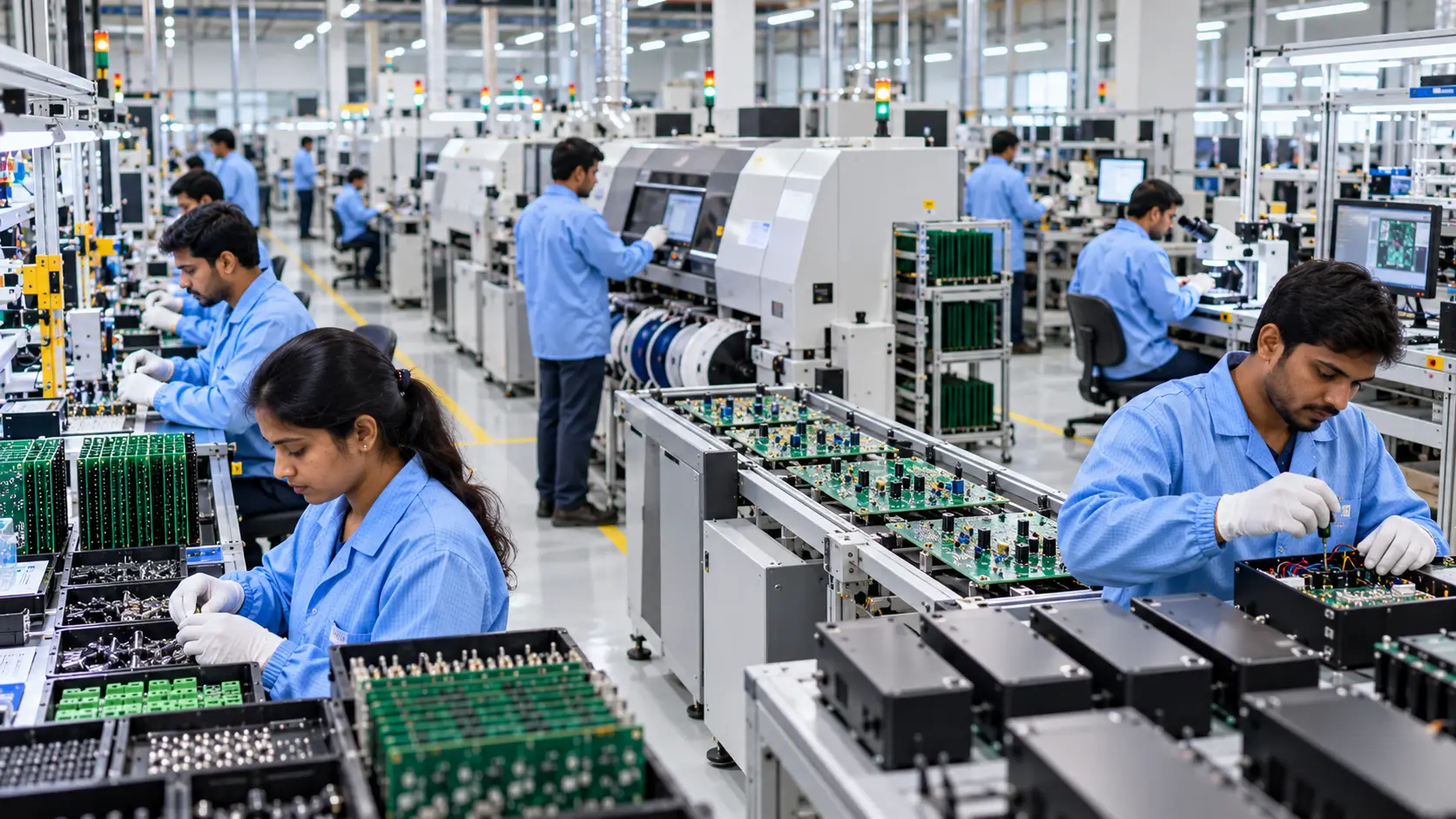
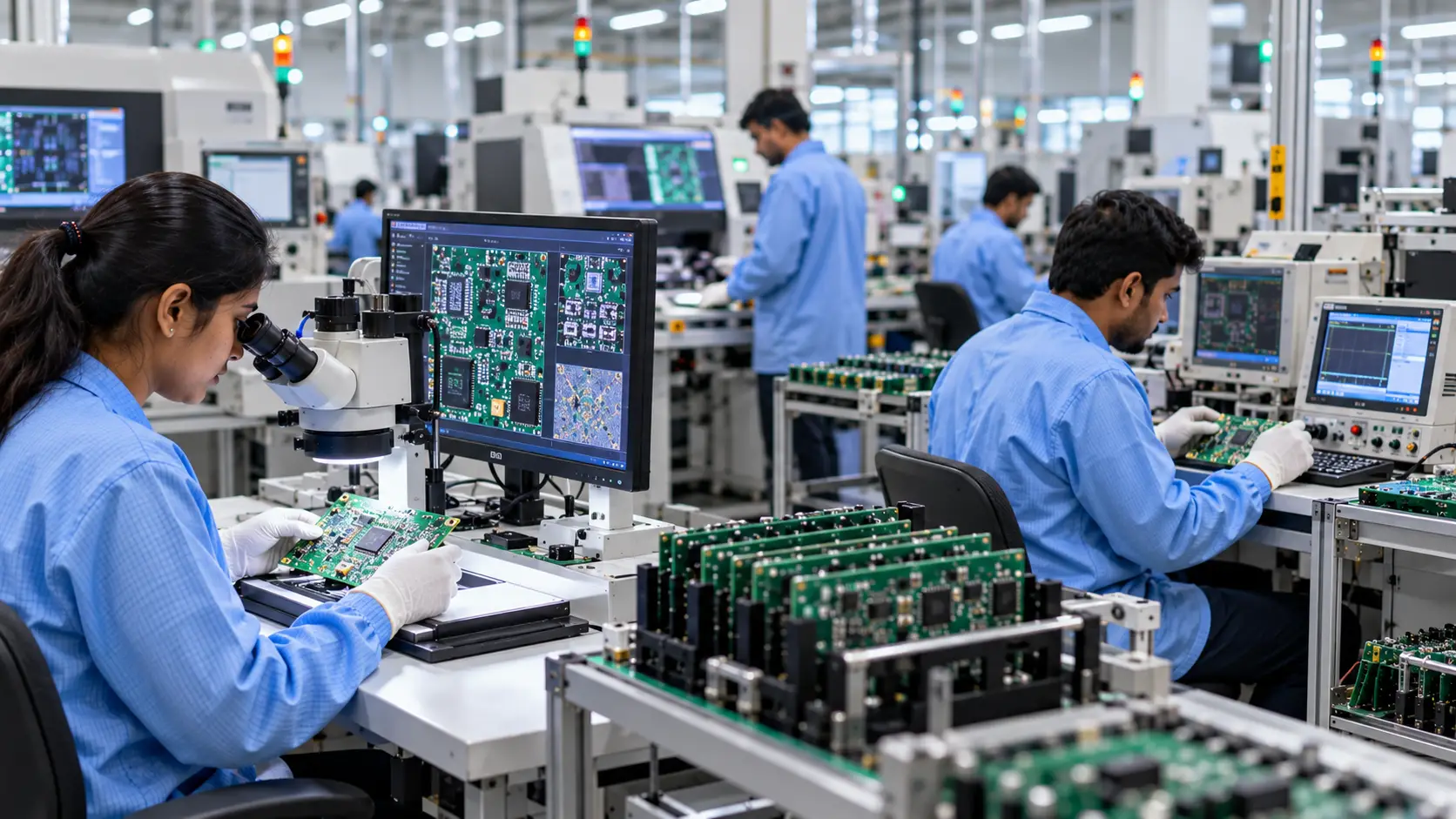
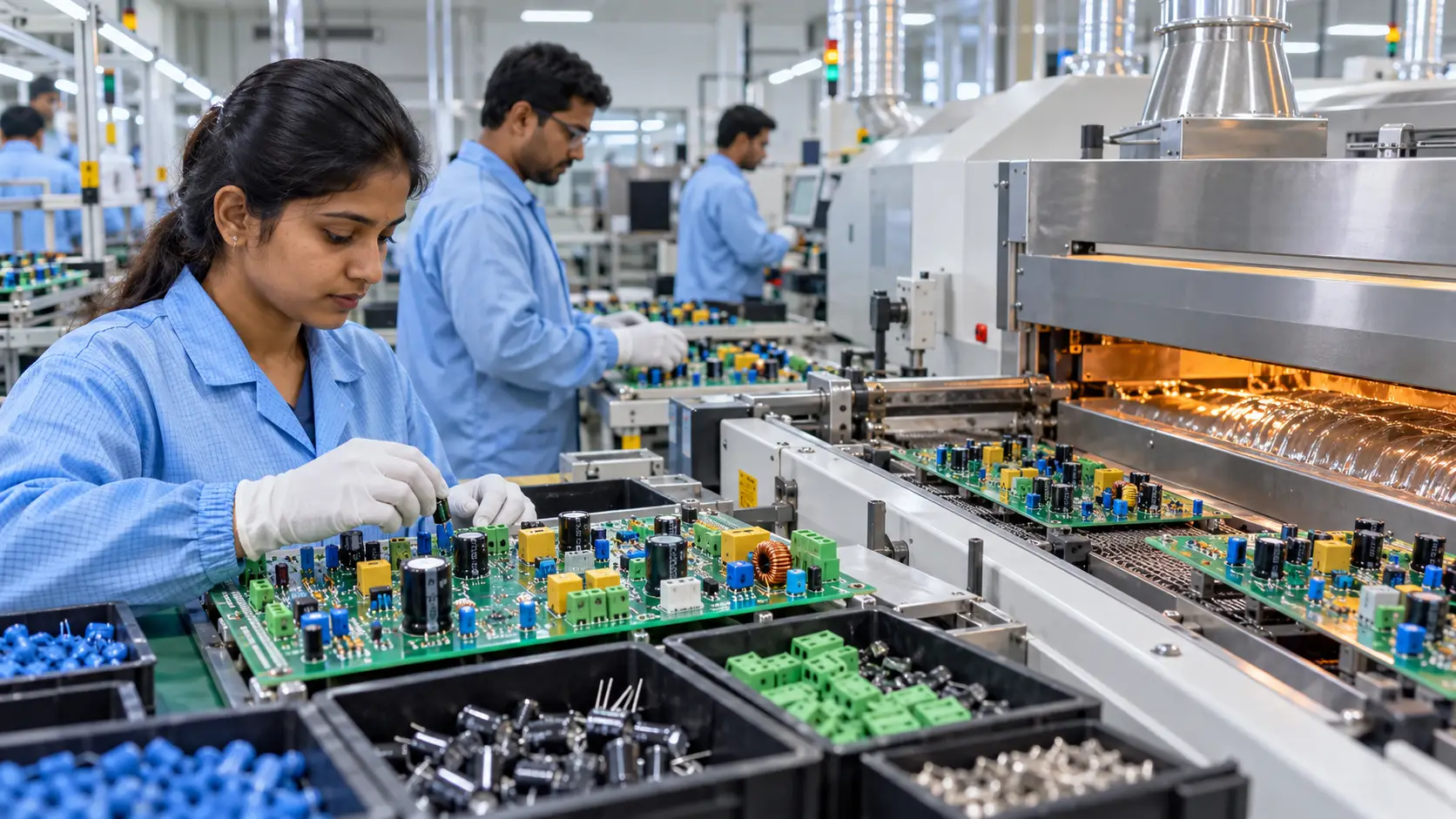
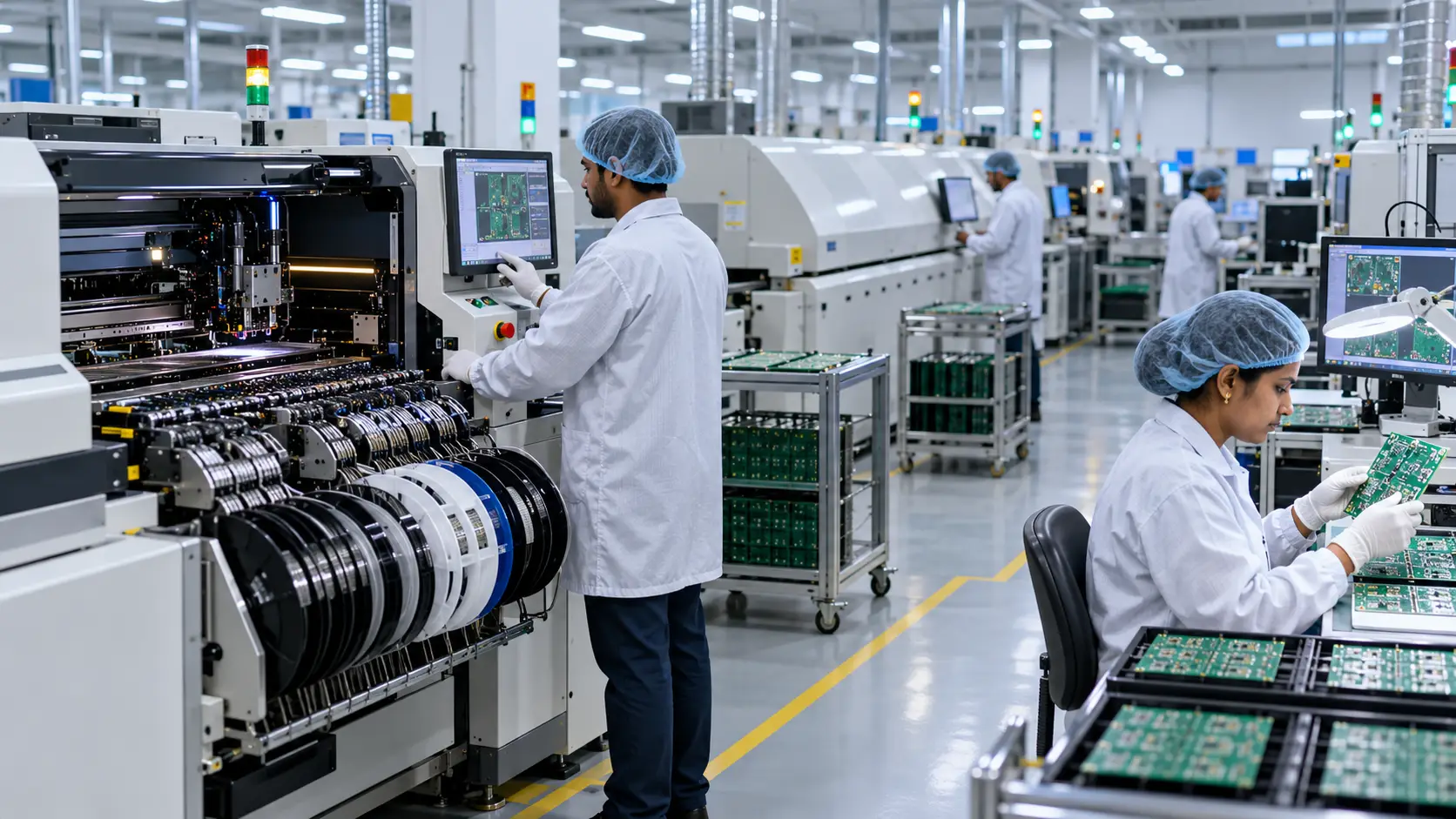
Choosing an EMS company is an important manufacturing decision for businesses developing or scaling electronic products. The right manufacturing partner needs to do more than assemble components. Its capabilities, infrastructure, engineering support, quality processes and production approach should match the requirements of the product.
With electronics manufacturing continuing to expand in India, businesses have access to a growing range of electronics manufacturing companies and service providers. This makes it important to evaluate an EMS company against clear manufacturing criteria rather than selecting a partner based only on cost or the number of services listed on a website.
This guide explains the key factors businesses should consider when evaluating an EMS company in India, from manufacturing capabilities and quality checks to infrastructure, engineering support and production requirements.
What Is an EMS Company?
An EMS company is a specialised electronics manufacturing provider that supports businesses with the production of electronic products. Depending on its capabilities, an EMS company can provide services across different stages of electronics manufacturing, including PCB assembly, component insertion, testing, final assembly and packaging.
The scope of services varies between manufacturers. Some may focus on specific production processes, while others provide capabilities across several stages of the electronics manufacturing lifecycle.
For this reason, businesses should evaluate an EMS company according to the actual requirements of their product rather than assuming that every electronics manufacturer provides the same capabilities.
1. Evaluate the Manufacturing Capabilities
The first step is to understand whether the EMS company has the manufacturing capabilities required for the product.
Depending on the PCB and product design, these capabilities may include Surface Mount Technology, Manual Insertion, through hole assembly, testing, final assembly and packaging.
A manufacturing partner with multiple relevant capabilities can help businesses manage different stages of production within a connected manufacturing environment.
Surface Mount Technology
Surface Mount Technology is used to place electronic components directly onto the surface of a printed circuit board. It is widely used for modern electronic assemblies and can support compact PCB designs and precision component placement.
Manual Insertion and Through Hole Assembly
Some PCBs include components that require manual insertion or through hole assembly. An EMS company should have the appropriate infrastructure and process capabilities when these requirements form part of the product.
Testing and Final Assembly
Manufacturing requirements can extend beyond PCB assembly. Depending on the product, the EMS partner may also need to support testing, final assembly and packaging.
The important question is not simply whether an EMS company offers these services, but whether its capabilities are suitable for the specific product and production requirements.
2. Check the Company’s Manufacturing Infrastructure
Manufacturing capabilities depend on the infrastructure supporting them. When evaluating an EMS company, businesses should understand the production environment, equipment and facilities available for the required manufacturing processes.
Infrastructure can include PCB assembly equipment, component insertion facilities, soldering systems, inspection equipment, testing areas and final assembly facilities depending on the scope of manufacturing.
A broader manufacturing infrastructure can also be useful when a product requires multiple production stages to be coordinated within the same manufacturing environment.
Businesses can review OEL’s electronics manufacturing infrastructure to understand the facilities supporting its manufacturing capabilities.
3. Evaluate Engineering and NPI Support
Manufacturing a new electronic product requires more than production equipment. Engineering teams and manufacturing processes need to understand the product requirements before regular production begins.
New Product Introduction can help establish manufacturing readiness by reviewing the product, production requirements and manufacturing process before regular production.
When evaluating an EMS company, businesses should therefore consider whether the manufacturer can support the transition from product preparation into manufacturing.
OEL provides New Product Introduction (NPI) capabilities as part of its electronics manufacturing services.
4. Examine Quality Control Processes
Quality should be evaluated across the manufacturing process rather than only at the end of production. Component handling, assembly, soldering, inspection and testing can all influence the quality of the finished product.
Businesses should understand how an EMS company monitors manufacturing quality and what checks are performed at relevant stages of production.
Component and Assembly Checks
Component placement and assembly should be checked according to the requirements of the PCB and manufacturing process. For SMT assembly, this can include inspection of solder paste application and component placement.
Soldering Quality
Soldering is an important part of PCB assembly. Businesses should understand which soldering processes are available and how soldering quality is controlled during production.
Testing
Testing requirements vary according to the product and its design. The EMS company should be able to explain which testing processes are applicable to the product and how manufacturing issues are identified during production.
The objective is to understand how quality is managed throughout manufacturing rather than relying on a single final inspection.
5. Review Quality and Compliance Information
Quality processes should be supported by an appropriate manufacturing quality framework. When evaluating an EMS company, businesses should review the manufacturer’s documented quality and compliance information and understand which standards or certifications are relevant to its operations.
OEL maintains a dedicated quality and compliance framework covering recognised quality, environmental and ESD-related requirements.
Businesses should evaluate compliance information according to the requirements of their product, industry and supply chain rather than treating certifications alone as a substitute for evaluating manufacturing processes.
6. Check Production Capacity and Process Requirements
An EMS company should be able to support the production requirements of the product. Capacity should therefore be considered together with the actual manufacturing process, component configuration and expected production volume.
Businesses should understand whether the manufacturer has the required production lines, equipment, workforce and process capabilities to support the expected manufacturing requirements.
It is also useful to understand how the manufacturer manages production as requirements change between product introduction and regular manufacturing.
7. Consider Product and Industry Experience
Different electronic products can have very different manufacturing requirements. A mobile device, IT hardware product, telecommunications product and wearable device may use different components, PCB configurations, assembly processes and testing requirements.
When evaluating an EMS company, businesses should therefore consider whether the manufacturer has relevant experience with the type of electronics product being developed or manufactured.
OEL supports manufacturing requirements across mobile devices, IT hardware, telecommunications, and hearables and wearables.
8. Evaluate the Ability to Support Multiple Manufacturing Stages
Some businesses require only PCB assembly, while others need support across several stages of electronics production.
An EMS partner that can support multiple relevant stages may simplify production coordination by connecting processes such as NPI, PCB assembly, component insertion, testing, final assembly and packaging.
Businesses should identify the stages they actually need before selecting a manufacturing partner and then evaluate whether the EMS company’s capabilities match those requirements.
9. Understand the Manufacturing Process Before Selecting a Partner
Before choosing an EMS company, businesses should understand how the manufacturer approaches the production process. This includes the transition from product preparation to assembly, inspection, testing and final product preparation.
A clear manufacturing process helps businesses understand where quality checks take place, how production requirements are managed and how different manufacturing stages connect with one another.
The manufacturer should also be able to explain its process in terms that are relevant to the product rather than relying only on generic descriptions of its services.
10. Do Not Evaluate an EMS Company on Cost Alone
Cost is an important part of manufacturing decisions, but it should be considered alongside capabilities, quality, infrastructure and production requirements.
A lower manufacturing cost may not provide the right value if the manufacturer does not have the required equipment, engineering support, quality processes or production capabilities.
Businesses should therefore compare EMS companies based on the complete manufacturing requirement, including the processes and support needed throughout production.
Key Criteria for Selecting an EMS Company in India
A practical evaluation can be organised around the following criteria:
- Manufacturing capabilities: Does the EMS company support the PCB and product assembly processes required?
- Infrastructure: Does it have the equipment and production facilities required for the manufacturing process?
- Engineering support: Can the manufacturer support product introduction and manufacturing preparation?
- Quality control: Are quality checks incorporated throughout the manufacturing process?
- Compliance: Does the manufacturer maintain relevant quality, environmental and ESD-related requirements?
- Production capacity: Can the manufacturing setup support the required production volume and process?
- Product experience: Does the manufacturer have relevant experience with the type of electronics being produced?
- Manufacturing integration: Can multiple required stages be coordinated within the manufacturing environment?
This approach provides a more complete basis for comparing EMS companies than looking at price or individual services in isolation.
Why OEL for Electronics Manufacturing Services?
Optiemus Electronics Limited (OEL) provides electronics manufacturing services supported by manufacturing infrastructure, engineering expertise and production capabilities across key stages of electronics production.
OEL’s manufacturing capabilities include Surface Mount Technology, Manual Insertion, Final Assembly, Testing and Packaging, and New Product Introduction. These capabilities support products across mobile devices, IT hardware, telecommunications, and hearables and wearables.
Businesses evaluating OEL can also explore its dedicated service capabilities for SMT manufacturing, Manual Insertion and broader electronics manufacturing services.
Frequently Asked Questions
What should I look for in an EMS company?
Businesses should evaluate manufacturing capabilities, infrastructure, engineering support, quality processes, compliance information, production capacity and relevant product experience when choosing an EMS company.
How do I choose an EMS company in India?
Start by defining the product’s manufacturing requirements and then compare EMS companies based on their assembly capabilities, infrastructure, quality processes, engineering support, production requirements and relevant product experience.
What services does an EMS company provide?
Depending on the manufacturer, EMS services can include New Product Introduction, PCB assembly, Surface Mount Technology, Manual Insertion, testing, final assembly and packaging.
Why is quality control important when selecting an EMS company?
Quality control affects component placement, soldering, assembly consistency and product reliability. Evaluating quality processes helps businesses understand how manufacturing quality is managed throughout production.
Should I choose an EMS company based only on price?
No. Cost should be considered alongside manufacturing capabilities, infrastructure, quality processes, engineering support and production requirements. The most suitable partner should match the complete manufacturing requirement.
Does OEL provide Electronics Manufacturing Services in India?
Yes. OEL provides electronics manufacturing services in India across key stages including SMT, Manual Insertion, FATP and NPI, supporting products across mobile devices, IT hardware, telecommunications, and hearables and wearables.
Conclusion
Choosing the right EMS company requires a clear understanding of the product’s manufacturing requirements and a structured evaluation of potential manufacturing partners. Capabilities, infrastructure, engineering support, quality checks, compliance, production capacity and relevant product experience should all form part of the evaluation.
For businesses looking for electronics manufacturing services in India, the objective should be to identify an EMS partner whose manufacturing capabilities and processes align with the product rather than selecting a provider based on a single factor.
OEL brings together multiple electronics manufacturing capabilities and supporting infrastructure to help businesses manage relevant stages of electronics production.