
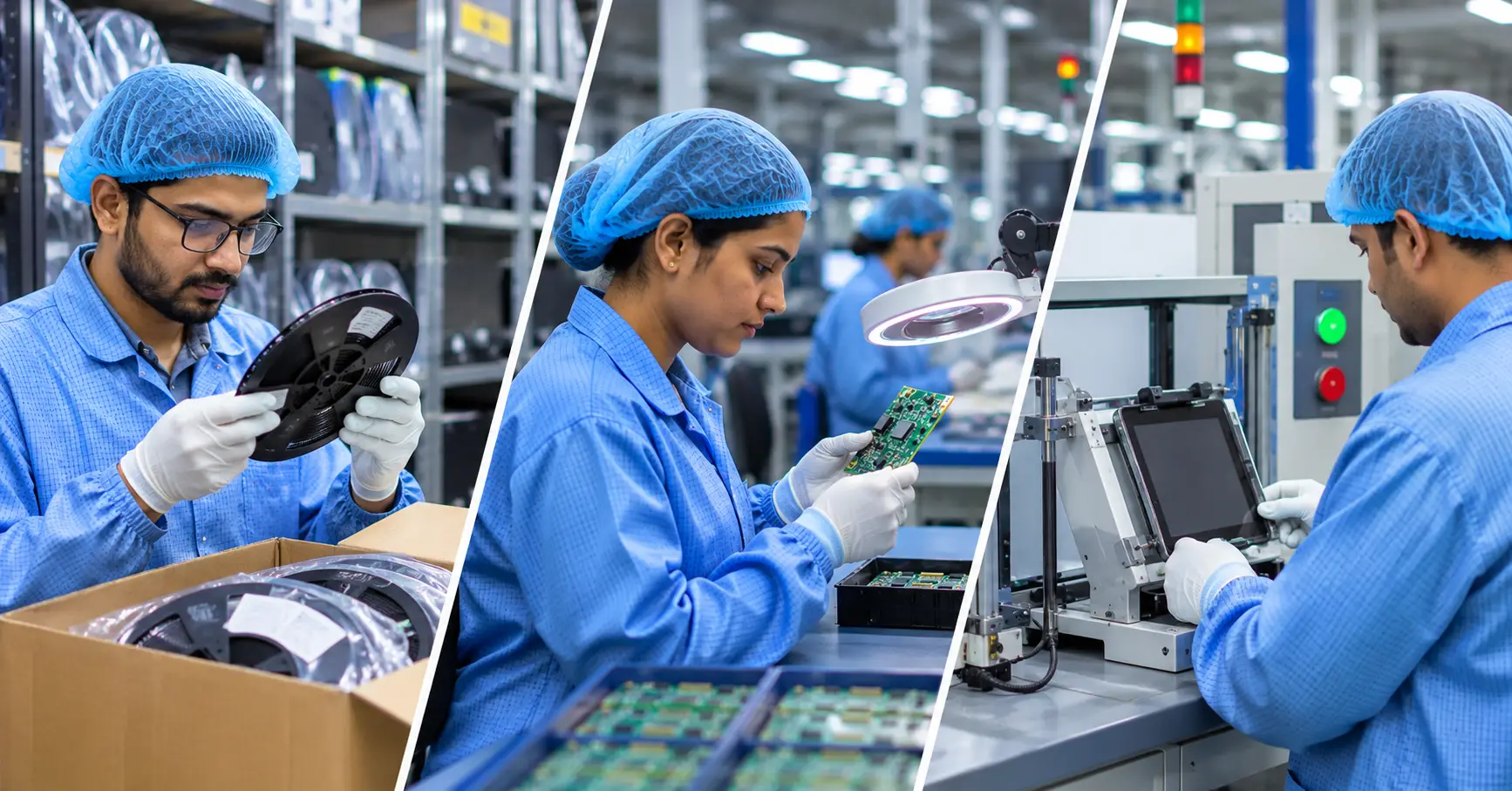
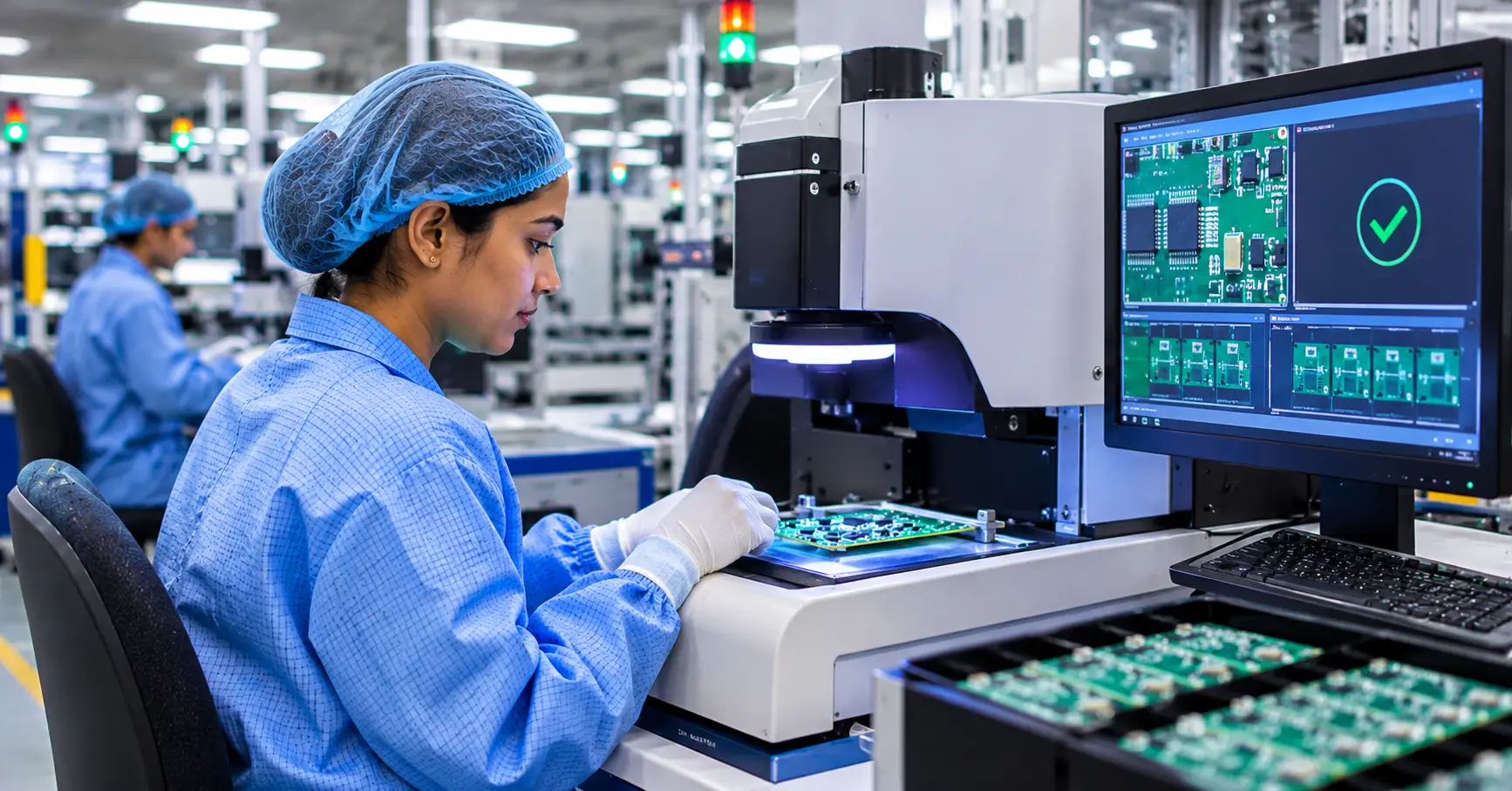
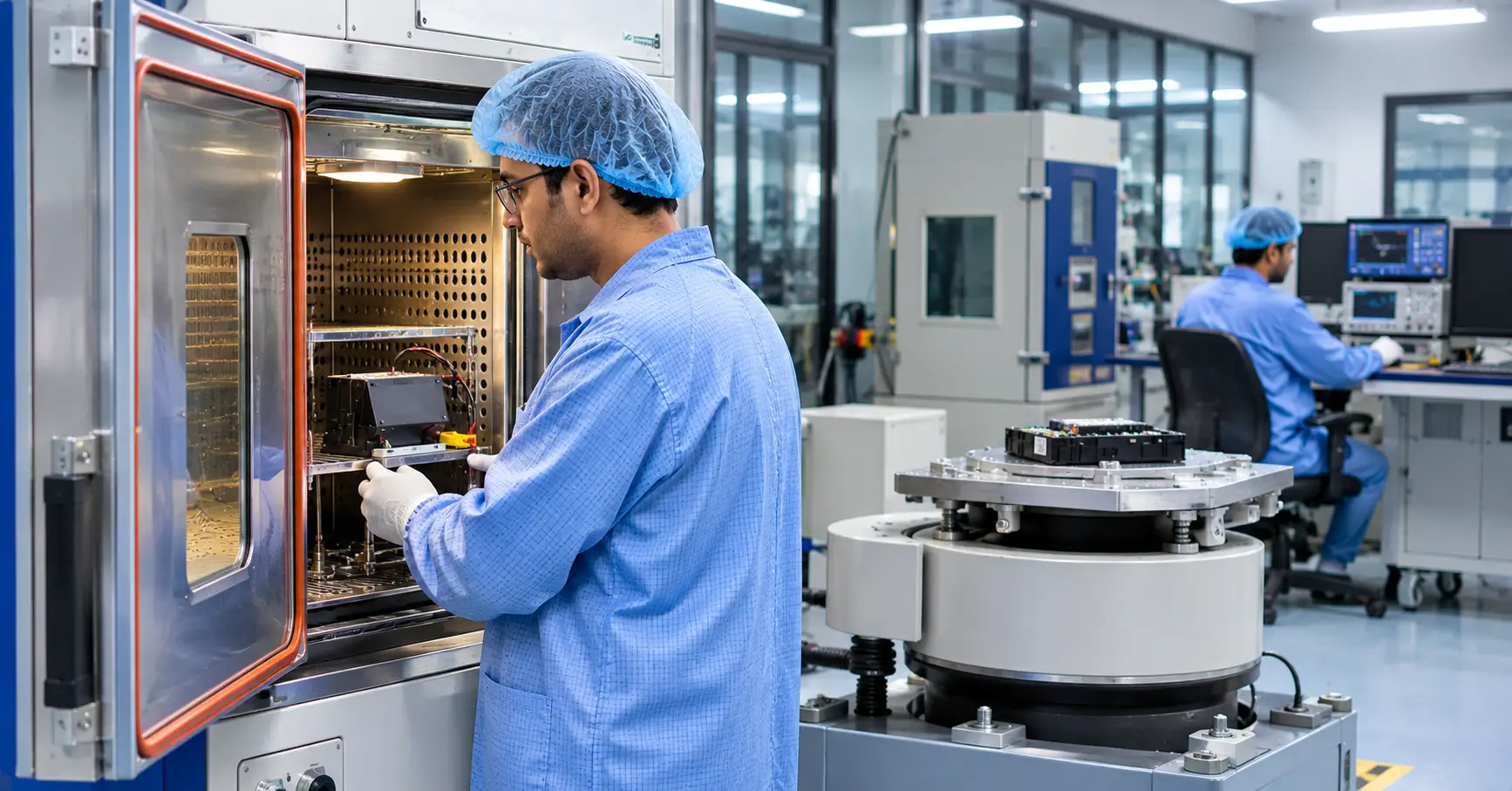
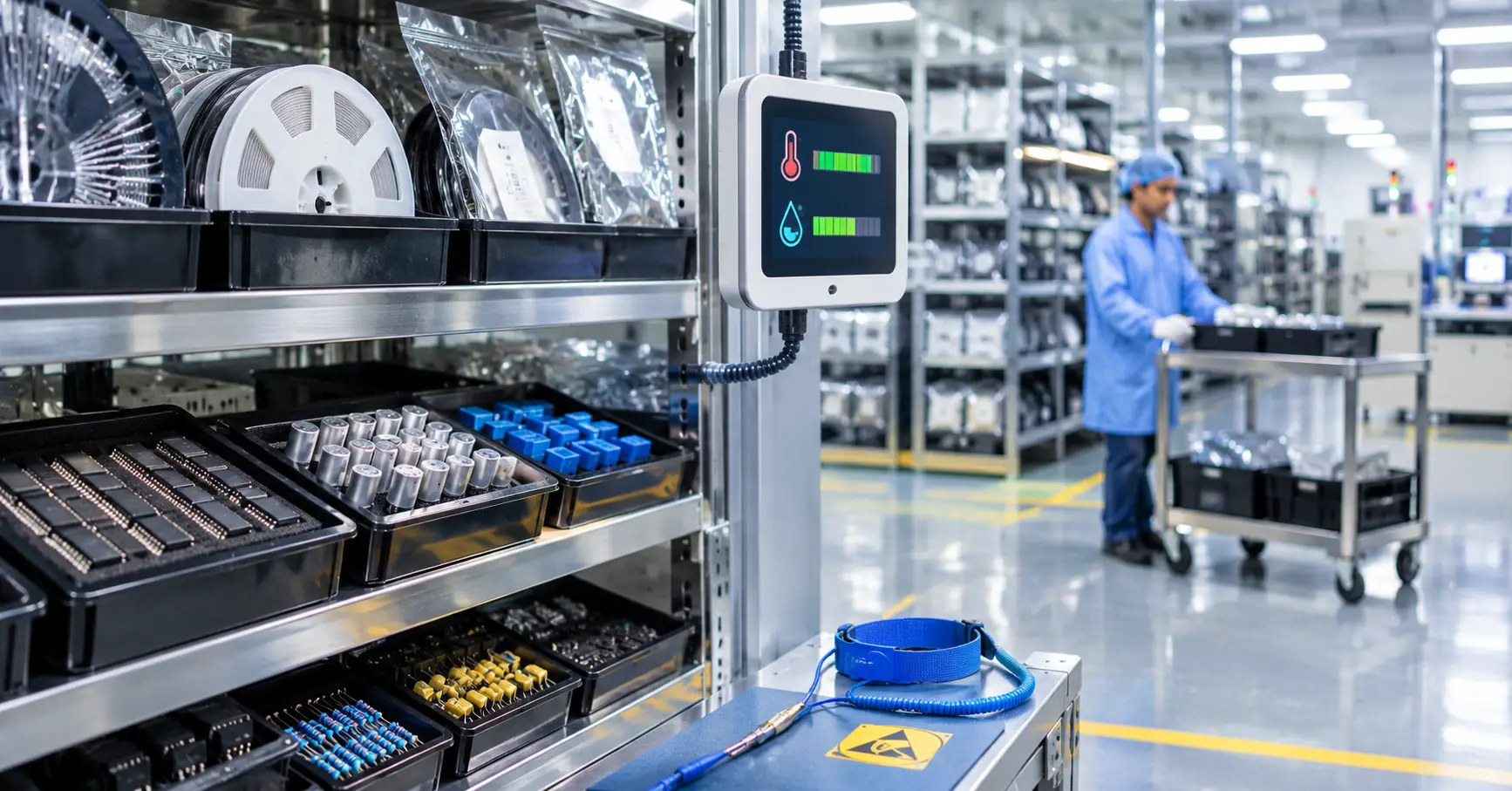
Modern electronics manufacturing generates an enormous amount of production data. Components arrive from suppliers, move through storage and kitting, enter PCB assembly and production lines, undergo inspection and testing, and eventually become finished products.
Knowing where a product is in the production process is useful. Knowing what went into it, which processes it passed through, what was tested, and what happened during production is even more valuable.
This is where manufacturing traceability becomes important. A Manufacturing Execution System (MES) can connect production events and product information to create a digital record of how an electronic product was manufactured.
What Is Traceability in Electronics Manufacturing?
Manufacturing traceability is the ability to follow the history of materials, components, processes and finished products through production.
In an electronics manufacturing environment, this can involve connecting information such as:
- Material and component lot information
- Supplier and incoming inspection information
- Production routes and process steps
- Machines and equipment involved
- Production dates and times
- Inspection and test results
- Process parameters and production events
- Defects, deviations, repairs and rework
- Finished-product or serialised-unit information
The result is a production history that can be searched when a manufacturer needs to understand how a particular product or group of products was built.
What Is MES?
A Manufacturing Execution System (MES) is a manufacturing software system that helps manage and record activities on the production floor.
MES sits between higher-level business systems and shop-floor execution. Depending on its implementation, it can support production tracking, work instructions, process control, data collection, quality information and traceability.
For traceability, the important role of MES is its ability to associate production information with the material, work-in-progress or finished product being manufactured.
Industry guidance from the International Society of Automation describes MES capabilities as including tracking and tracing, production data collection, work instructions and shop-floor execution.
How MES Creates a Manufacturing History
Traceability starts before a product reaches final assembly. Materials and components need to be identified and their movement through production needs to be recorded.
A typical traceability flow can look like:
Material Receipt → Inspection → Storage → Kitting → PCB Assembly → Testing → Final Assembly → Final Testing → Finished Product
At relevant points in this flow, MES can collect and associate production data with the appropriate material, work order, board, assembly or finished unit.
This creates what is often described as product genealogy — the relationship between a finished product and the materials, processes and production events associated with it.
How Components Are Tracked
Electronics products can contain hundreds or thousands of individual components. A traceability system helps manufacturers maintain relationships between incoming materials and the products in which those materials are eventually used.
For example, a component may be received under a particular lot, inspected and stored before being issued to production. During manufacturing, the relevant material information can be associated with the PCB, assembly or finished product.
This makes it possible to investigate questions such as:
- Which material lot was used?
- Which products received material from that lot?
- Which production process consumed the material?
- What inspection information was recorded when it was received?
Lot traceability can therefore help manufacturers identify the potential scope of a quality issue instead of relying on manual records or assumptions. Siemens describes lot traceability as connecting materials, processes, equipment, quality data, exceptions, rework, dates and times across manufactured lots and units.
Tracking the Production Process
Component information alone is not enough. Electronics manufacturers also need visibility into what happened to the product during production.
Depending on the system and manufacturing process, traceability data can include:
- Production line or workstation
- Process step completed
- Machine or equipment used
- Date and time of the operation
- Inspection or test result
- Process deviation or exception
- Repair or rework activity
This creates a more complete picture of the manufacturing journey.
For example, if a finished electronic product fails a particular functional test, production records can help investigators work backwards through its manufacturing history and identify the relevant components, process steps and test results.
Why Finished-Product Traceability Matters
The value of traceability becomes particularly clear when a quality issue is discovered after production.
Without reliable production records, manufacturers may need to investigate large quantities of products manually. With structured traceability data, they can potentially identify the affected material, production period, process or product population more precisely.
This can support:
- Root-cause analysis
- Defect containment
- Rework management
- Quality investigations
- Customer queries
- Production audits
- Continuous improvement
Traceability therefore supports both manufacturing control and the ability to investigate issues after a product has moved further through the production lifecycle.
Traceability Across SMT and PCB Assembly
PCB assembly is one of the areas where detailed production records can become particularly valuable.
A PCB may pass through multiple stages including component placement, soldering, inspection and testing. Each stage can generate production information that contributes to the overall manufacturing record.
When traceability is connected across these stages, manufacturers can establish relationships between the PCB, components, production equipment, process events and inspection results.
This becomes increasingly important as electronic products become more complex and production environments handle multiple products, revisions and component configurations.
Traceability and Quality Control
Traceability and quality control are closely connected, but they are not the same thing.
Quality control determines whether a material, process or product meets defined requirements. Traceability records the information needed to understand what happened during manufacturing and connect that information to the relevant product or production population.
When the two work together, manufacturers can use production data to investigate deviations and identify patterns rather than treating every defect as an isolated event.
This also supports data-driven manufacturing improvement because historical production information can be analysed to identify recurring process problems.
MES, Tracking and Traceability: What’s the Difference?
The terms tracking and traceability are sometimes used interchangeably, but they describe different aspects of production visibility.
Tracking generally focuses on where a product, material or work-in-progress item is and what stage it should move to next.
Traceability focuses on the history behind the product — where its materials came from, which processes it passed through and what production information was recorded along the way.
An MES can support both by connecting production execution with the data generated throughout the manufacturing process. Siemens describes traceability as backward-looking genealogy while tracking provides forward-looking production visibility.
What Happens When a Traceability Issue Is Detected?
Consider a situation where a component lot is later found to have a quality concern.
A traceability-enabled manufacturing environment can help answer three important questions:
- Where did the component come from?
- Where was it used?
- Which finished products or assemblies may be affected?
The answers can help the quality and manufacturing teams determine the appropriate containment and investigation scope.
Similarly, if a particular production process produces an unusual defect pattern, historical process and test information can help identify when the issue began and which production population may require attention.
What Data Can an Electronics Manufacturing MES Connect?
The exact data captured depends on the MES implementation and the manufacturer’s processes. In a typical electronics manufacturing environment, relevant information can include:
- Material and component identities
- Lot and serial numbers
- Bill of Materials information
- Work orders and production routes
- Machine and workstation information
- Operator or production-event information
- Process timestamps
- Inspection and test results
- Defects and non-conformances
- Repair and rework records
Connecting these records creates a more complete manufacturing data trail than isolated spreadsheets or disconnected production records.
OEL’s MES and FATP Infrastructure
OEL specifically identifies a self-developed Manufacturing Execution System (MES) as part of its manufacturing excellence approach. The company’s current infrastructure information also states that its FATP infrastructure includes a state-of-the-art MES, a TRC area and a dedicated CTQ area.
This places MES within OEL’s broader manufacturing infrastructure alongside its SMT, Manual Insertion, FATP and reliability-testing capabilities. OEL describes its manufacturing approach as data-driven and focused on manufacturing excellence, quality and continuous improvement.
Explore OEL’s Electronics Manufacturing Infrastructure
Explore OEL’s FATP Infrastructure
Why Traceability Is Becoming More Important
Electronics manufacturing is becoming more complex. Products can contain more components, production networks can involve multiple suppliers and manufacturing processes generate increasing amounts of data.
At the same time, manufacturers need stronger visibility into quality, production performance and material usage.
A structured MES-based traceability system can help turn production data into a connected manufacturing record. Instead of asking teams to reconstruct the history of a product manually, the relevant information can be captured as production takes place.
This is particularly useful when manufacturers need to investigate defects, support customer requirements, analyse production performance or improve manufacturing processes.
What Brands Should Ask an EMS Partner About Traceability
For brands evaluating an Electronics Manufacturing Services partner, traceability should be considered alongside production capacity, quality systems and manufacturing technology.
Useful questions include:
- What materials and production events are traceable?
- How are components linked to assemblies and finished products?
- How are inspection and test results recorded?
- How are defects, repairs and rework captured?
- Can production history be retrieved for a specific product or lot?
- How is production data protected and managed?
- How does traceability integrate with quality and manufacturing processes?
The answers will depend on the manufacturer’s MES architecture, product requirements and customer-specific traceability needs.
Conclusion
Electronics manufacturing traceability is fundamentally about creating a reliable connection between materials, processes, production events, quality data and finished products.
MES provides the digital layer that can collect and connect this information during production, creating a searchable manufacturing history and supporting tracking, genealogy, quality investigations and continuous improvement.
For electronics manufacturers, the value is not simply having more data. It is being able to connect the right data to the right product, process or material when it matters.
OEL’s self-developed MES and its MES-enabled FATP infrastructure form part of its broader electronics manufacturing environment, alongside SMT, Manual Insertion, final assembly, testing, packaging and reliability capabilities.
Explore OEL’s Electronics Manufacturing Services
Frequently Asked Questions
What is electronics manufacturing traceability?
Electronic manufacturing traceability is the ability to track and retrieve the history of materials, components, processes, inspections, tests and production events associated with an electronic product or production lot.
What is MES in electronics manufacturing?
MES, or Manufacturing Execution System, is a production-floor software system that can support manufacturing execution, production tracking, data collection, quality information and traceability.
How does MES track components?
MES can associate material and component information with production orders, processes, assemblies and finished products. Depending on the implementation, this can include lot numbers, serial numbers, inspection data and production events.
Why is traceability important in electronics manufacturing?
Traceability helps manufacturers investigate quality issues, identify affected materials or products, support root-cause analysis, manage rework and respond to production or customer queries using documented manufacturing data.
What is product genealogy in manufacturing?
Product genealogy is the relationship between a finished product and the materials, components, processes, equipment and production events associated with its manufacture.
Does OEL use MES in its manufacturing infrastructure?
Yes. OEL states that it has a self-developed Manufacturing Execution System and identifies a state-of-the-art MES within its FATP infrastructure.