
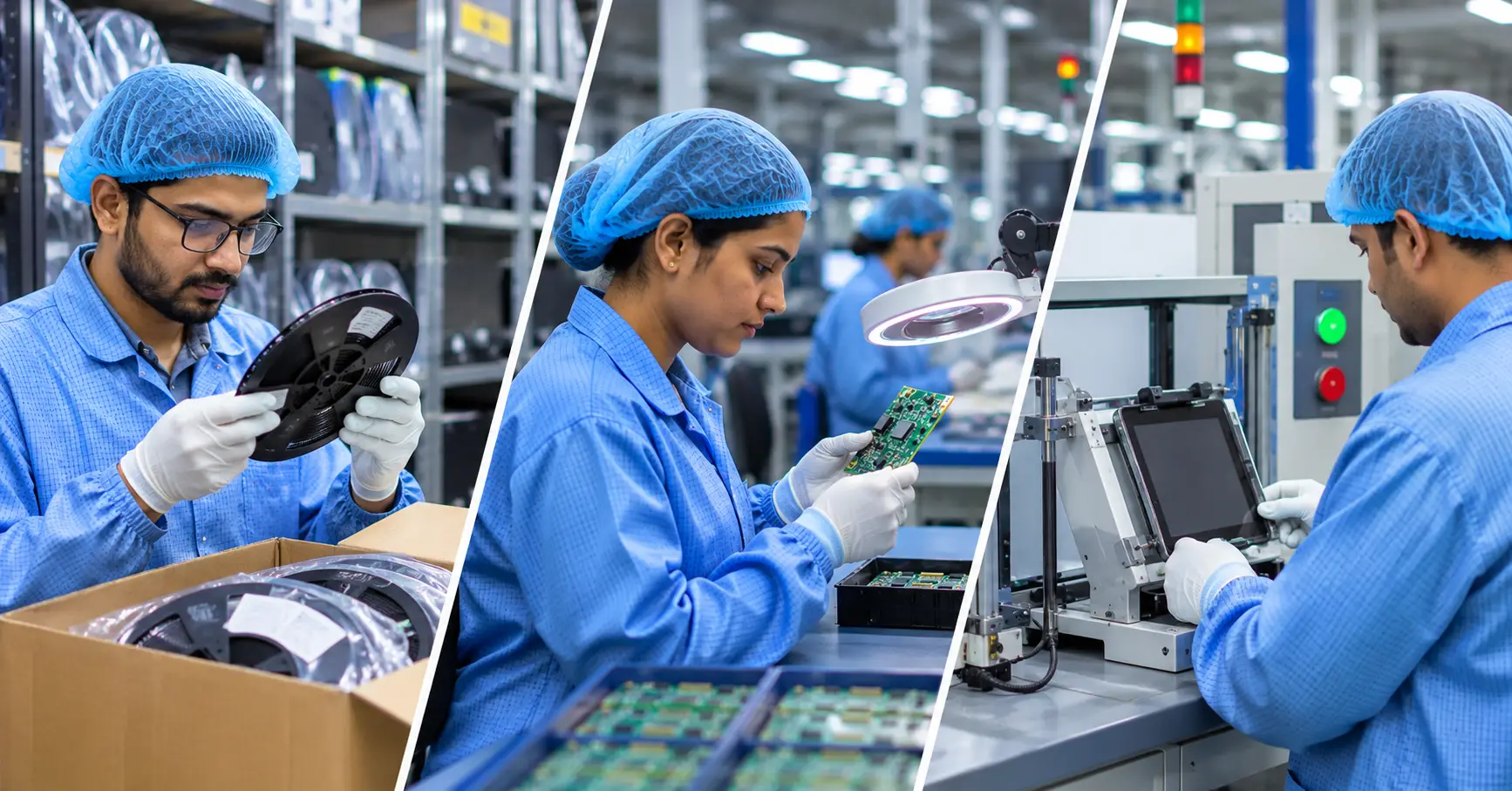

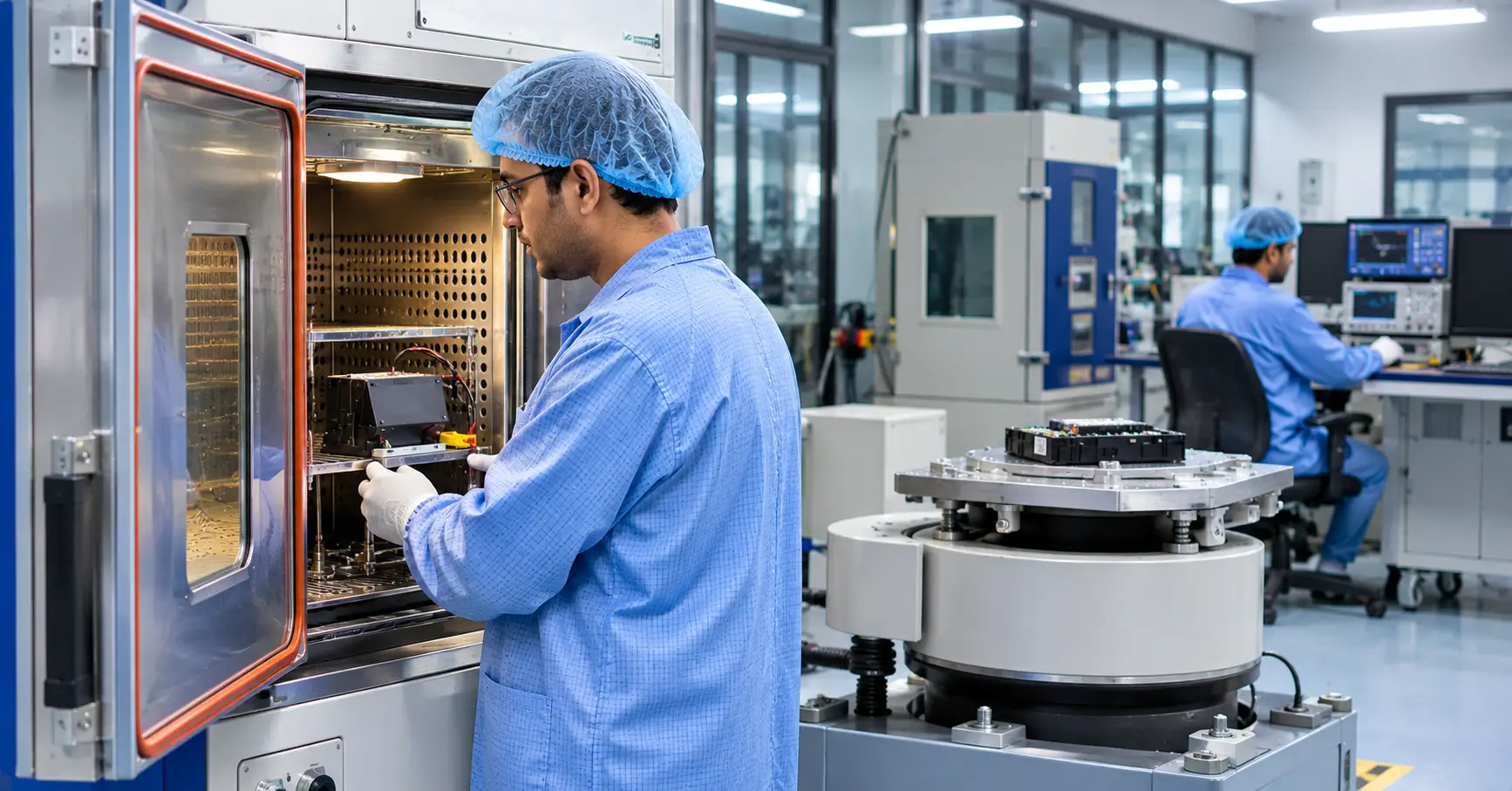
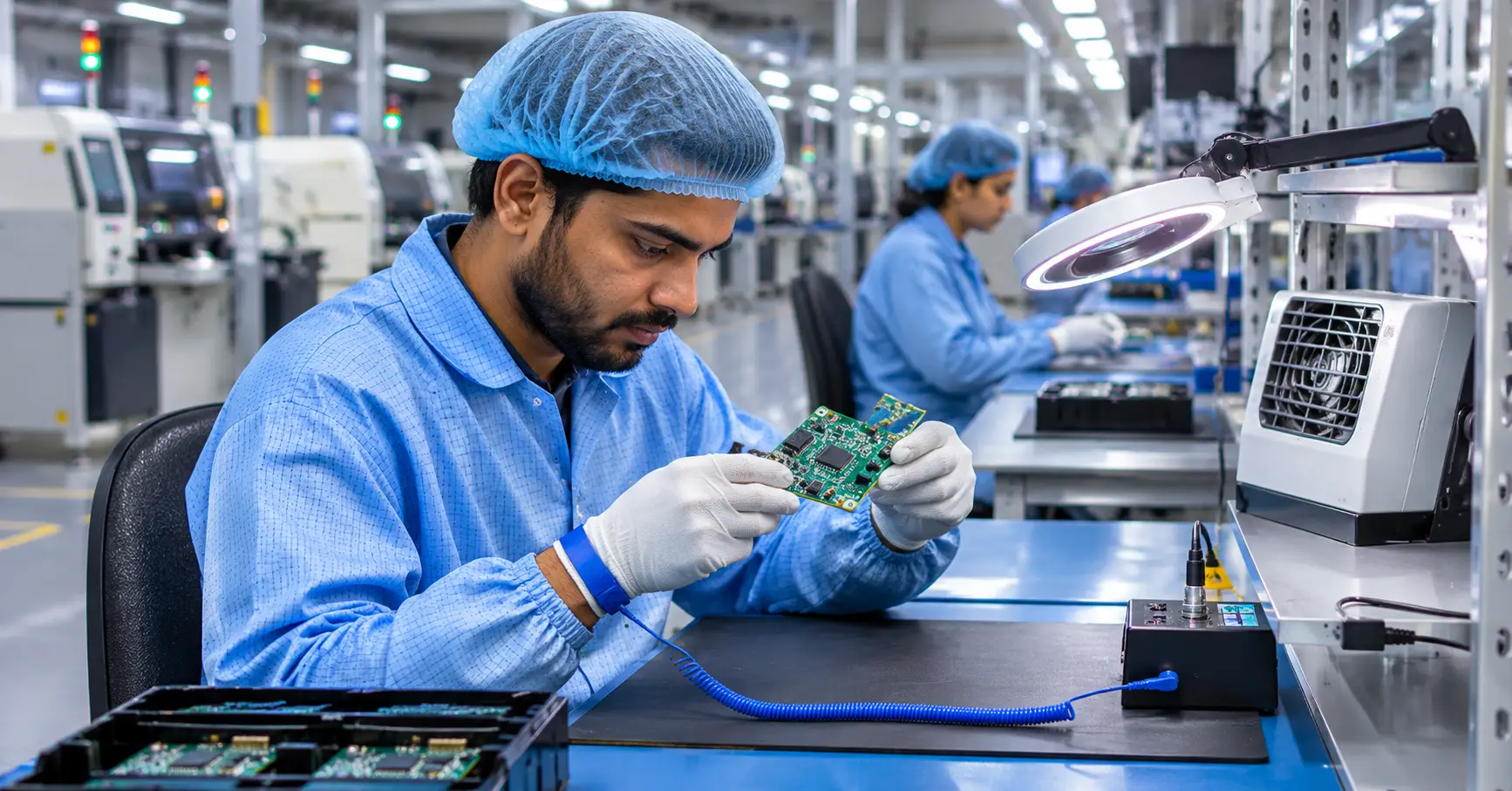
Electronic components may spend days, weeks or longer in storage before entering production. During that period, their condition can be affected by environmental conditions, packaging, handling and material-control practices.
For electronics manufacturers, component storage is therefore more than a warehouse function. It is an important part of maintaining material quality before components reach SMT, PCB assembly or other production processes.
Why Electronic Component Storage Matters
Modern electronic products use large numbers of components, including integrated circuits, resistors, capacitors, connectors and sensors. Different components can have different storage and handling requirements depending on their construction and sensitivity.
Moisture-sensitive components are a particularly important example. Certain packages can absorb moisture from the surrounding environment, which can become a concern when they are subsequently exposed to high temperatures during solder reflow.
IPC/JEDEC J-STD-033 provides handling, packing, shipping and use requirements for moisture/reflow-sensitive devices and addresses practices intended to prevent moisture-related damage during assembly. IPC/JEDEC J-STD-033
Temperature-Controlled Storage
Temperature can influence the condition and storage life of electronic materials. However, there is no single temperature range that applies to every component.
Storage conditions should therefore follow the requirements specified by the component manufacturer and applicable handling standards. Controlled storage helps maintain stable conditions and reduces unnecessary exposure to unsuitable environments.
Humidity and Moisture-Sensitive Components
Humidity is particularly important for moisture-sensitive electronic components.
When a moisture-sensitive package absorbs sufficient moisture, exposure to solder-reflow temperatures can cause the absorbed moisture to expand rapidly. Under applicable conditions, this can contribute to package cracking, delamination or other damage.
IPC/JEDEC J-STD-020 establishes moisture sensitivity classifications for applicable non-hermetic surface-mount devices, while J-STD-033 provides handling and storage practices for moisture/reflow-sensitive devices.
This is why moisture control needs to continue from storage through production rather than being considered only at the reflow stage.
Moisture Sensitivity and Floor Life
Once moisture-sensitive components are removed from their protective packaging, their allowable exposure can depend on their moisture sensitivity classification and the applicable conditions.
Production teams may therefore need to monitor exposure time and follow defined procedures for opening, handling, resealing or otherwise processing sensitive components.
The objective is to keep exposure within the applicable limits before the component reaches the solder-reflow process.
Packaging and Component Protection
Environmental control works together with appropriate packaging.
Moisture-sensitive components may be supplied in moisture-barrier packaging and handled using procedures designed to limit moisture exposure. Once the packaging is opened, the material may require additional controls depending on its classification and exposure history.
Packaging and handling systems should also protect components against contamination and physical damage during storage and movement.
Component Identification and Material Control
Effective storage starts with accurate material identification.
A controlled material-management system can maintain information such as:
- Part numbers and component descriptions
- Supplier information
- Lot or batch identification
- Quantity received
- Inspection status
- Storage location
- Applicable storage requirements
- Production issue and consumption information
This helps prevent incorrect material from being issued to production and maintains visibility into component history.
Material Classification and Storage Zones
Different components do not necessarily require identical storage conditions. Manufacturers can therefore use material categories and dedicated storage zones to align controls with the characteristics of the materials.
OEL states that its storage infrastructure includes specialised zones for Class A, B and C materials, with temperature- and humidity-controlled areas so components can be stored according to customised requirements.
This approach allows material controls to be aligned with the requirements of different component categories.
Handling Components Before Production
Storage controls need to remain effective when components are moved to production.
Personnel may need to consider ESD protection, packaging integrity, mechanical sensitivity and cleanliness while transferring materials between storage and manufacturing areas.
For moisture-sensitive components, exposure requirements also need to be maintained as materials move from controlled storage to the production floor.
ESD-sensitive components should similarly be handled in accordance with the facility’s ESD control programme.
Inventory Rotation and Material Issuing
Inventory rotation helps manufacturers control material movement and availability.
Depending on the material and manufacturing process, facilities may use methods such as FIFO (First In, First Out) or other controlled issuing practices.
The important consideration is that materials are issued according to their applicable storage requirements, shelf-life or exposure limitations and production needs.
OEL identifies ERP controls, bin systems and LIFO/FIFO practices as part of its storage infrastructure.
Storage and PCB Assembly
Components eventually move from storage into processes such as SMT and PCB assembly. Their condition and handling history can therefore directly affect production readiness.
For moisture-sensitive devices, appropriate storage and exposure control is particularly relevant before solder reflow. For ESD-sensitive materials, appropriate electrostatic protection needs to continue during handling and assembly.
Storage is therefore one of the controls that connects material management with manufacturing execution.
What Can Go Wrong With Poor Component Storage?
The consequences depend on the material and the nature of the storage deviation. Potential issues include:
- Moisture absorption in sensitive components
- Damage during subsequent solder reflow
- Component contamination
- Physical damage from unsuitable handling
- Loss of material or lot visibility
- Use of material outside defined storage or exposure requirements
- Additional inspection, rework or material disposition
Not every storage deviation results in product failure. The appropriate response depends on the component specifications, duration and severity of the deviation, packaging condition and applicable handling requirements.
Storage Records and Traceability
Storage information can also contribute to broader electronics manufacturing traceability.
When material-management systems record component identity, location, status and movement into production, manufacturing teams can establish a clearer connection between incoming materials and production orders.
This can help answer questions such as:
- Which lot was issued to a production order?
- When was the material received?
- Where was it stored?
- Was it handled according to its defined requirements?
- Which products or assemblies used the material?
Such records can become particularly useful during quality investigations.
OEL’s Electronics Component Storage Infrastructure
OEL identifies Storage Infrastructure as a dedicated part of its electronics manufacturing environment.
The company states that its storage infrastructure includes specialised Class A, B and C material zones with temperature and humidity control. OEL also identifies ERP controls, bin systems and LIFO/FIFO practices within its material-management approach.
These systems support the movement of components from material receipt and preparation into subsequent manufacturing processes.
Explore OEL’s Storage Infrastructure
What Should Brands Ask an EMS Partner About Component Storage?
When evaluating an Electronics Manufacturing Services partner, brands should understand how materials are controlled before they reach production.
Useful questions include:
- Are storage areas temperature and humidity controlled where required?
- How are different component categories stored?
- How are moisture-sensitive materials identified and handled?
- How are ESD-sensitive materials protected?
- How are material lots and part numbers tracked?
- How are storage deviations recorded and addressed?
- How are components issued to production?
- How are inventory-rotation methods applied?
- How does material information connect with production traceability?
Conclusion
Electronics component storage is an important part of manufacturing quality. Temperature, humidity, packaging, handling, identification and inventory control can all influence the condition and availability of components before they enter production.
For moisture-sensitive devices, controlled storage and handling can help reduce the risk of moisture-related damage during solder reflow. IPC/JEDEC standards provide specific classification and handling frameworks for applicable components.
For an EMS provider, effective storage infrastructure creates a controlled connection between incoming materials and manufacturing execution.
OEL’s specialised Class A, B and C storage zones, temperature and humidity controls, ERP controls and material-management systems form part of its broader electronics manufacturing infrastructure.
Explore OEL’s Storage Infrastructure
Frequently Asked Questions
Why is temperature important for electronic component storage?
Temperature can affect the storage condition and life of electronic materials. The appropriate limits depend on the specific component and its manufacturer’s requirements.
Why is humidity important in electronics component storage?
Some electronic components can absorb moisture from the environment. For moisture-sensitive devices, excessive moisture exposure can increase the risk of damage during subsequent solder reflow.
What is moisture sensitivity in electronic components?
Moisture sensitivity refers to the susceptibility of certain electronic packages to damage associated with absorbed moisture and subsequent exposure to high temperatures during assembly processes such as solder reflow.
How should moisture-sensitive components be handled?
Moisture-sensitive components should be stored, packaged, exposed and processed according to their applicable moisture sensitivity classification and manufacturer or industry requirements.
How does OEL manage electronic component storage?
OEL states that it has specialised Class A, B and C material storage zones with temperature and humidity control. Its storage infrastructure also includes ERP controls, bin systems and LIFO/FIFO practices.
Why is component storage important for PCB assembly?
Components move from storage into PCB assembly processes such as SMT. Correct identification, storage and handling help maintain material quality and manufacturing consistency.