
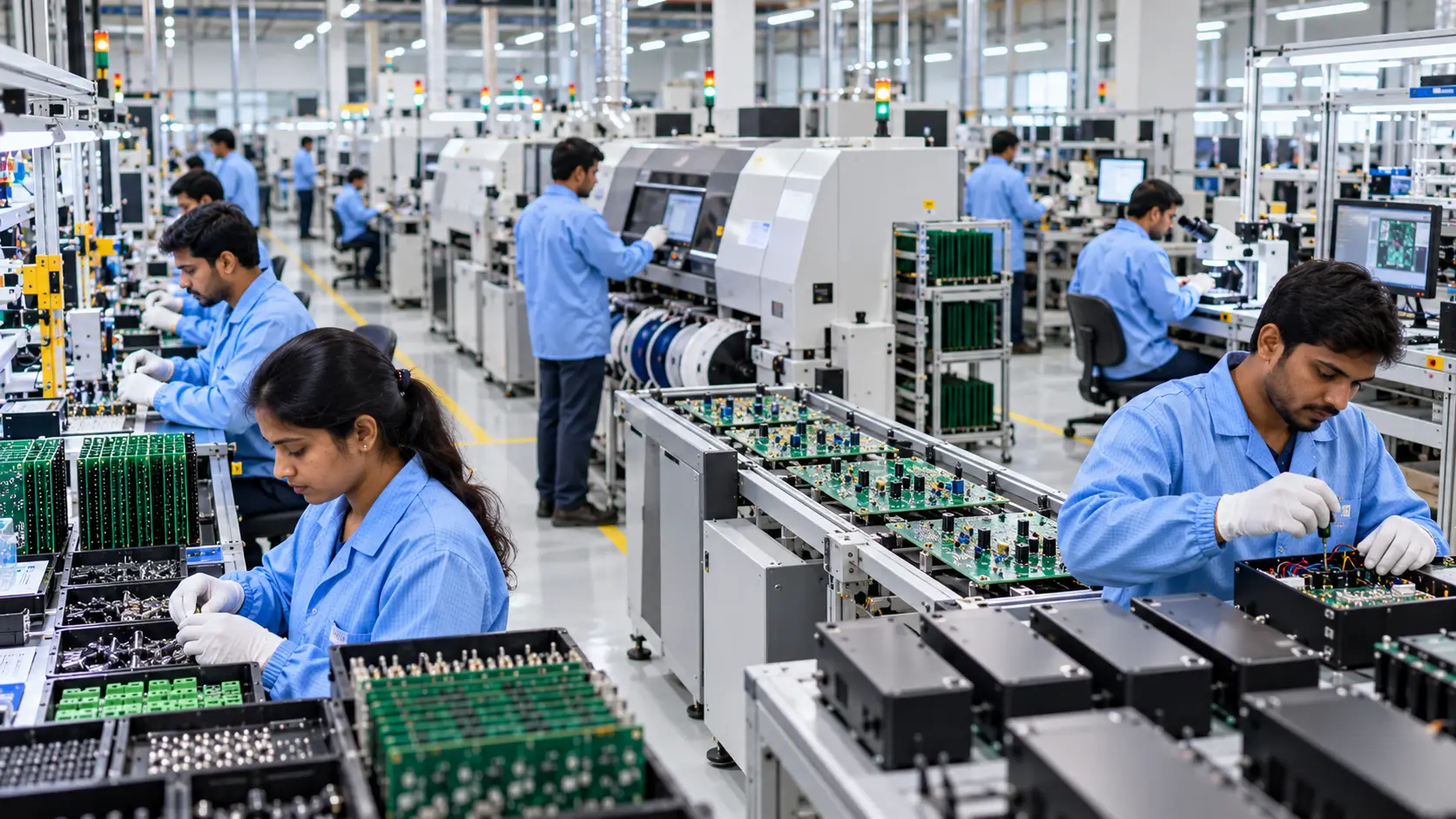
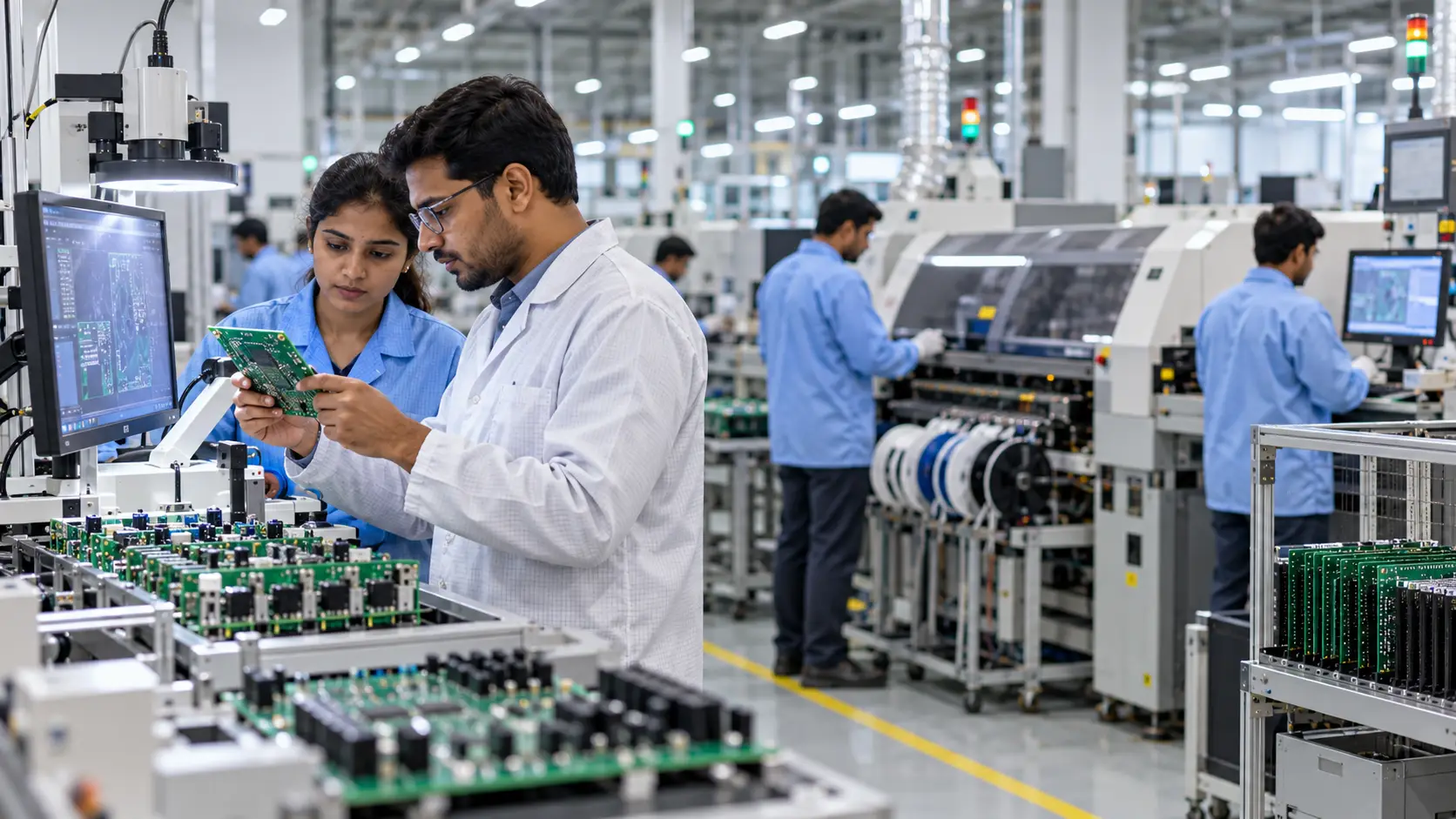
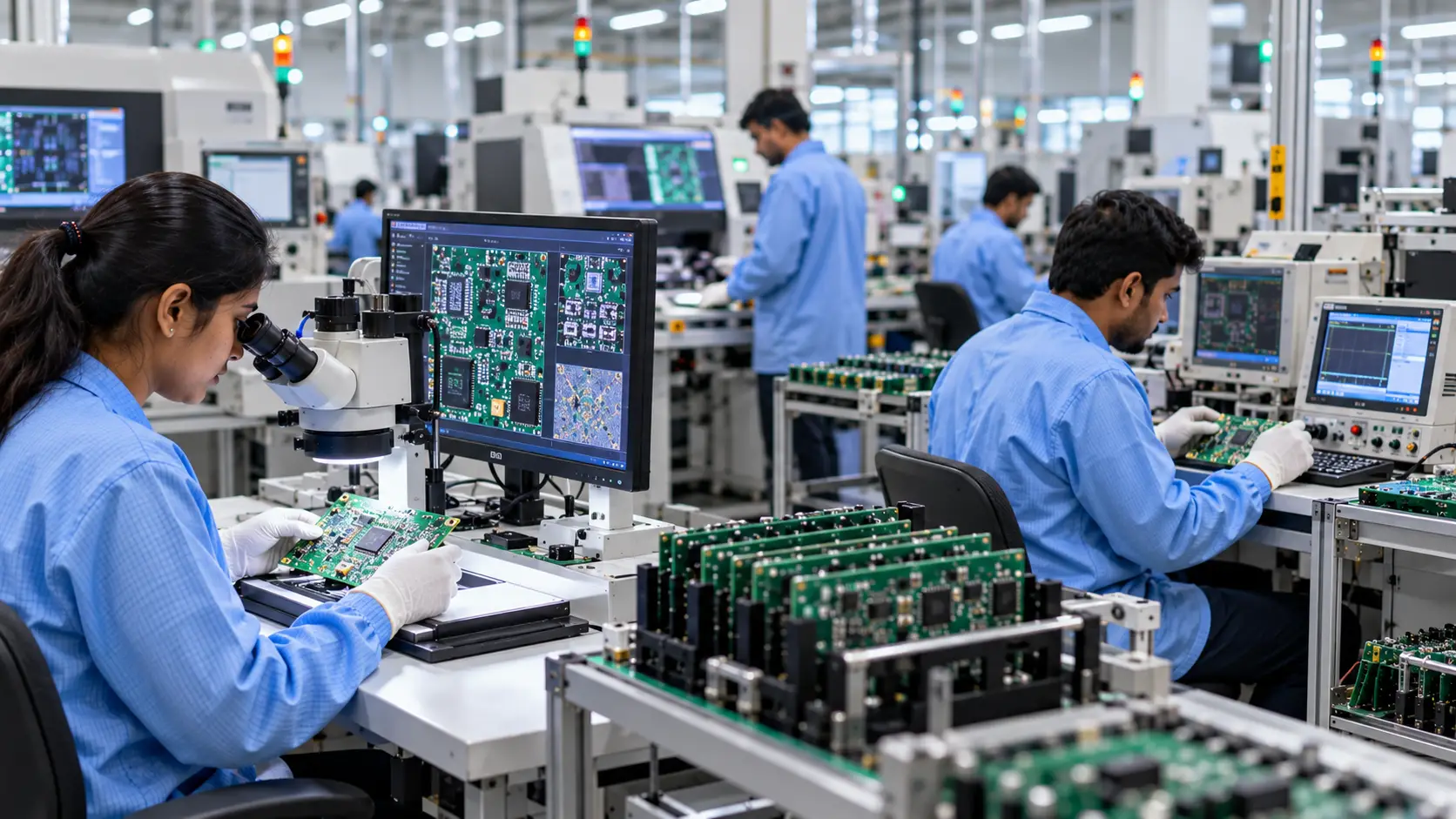
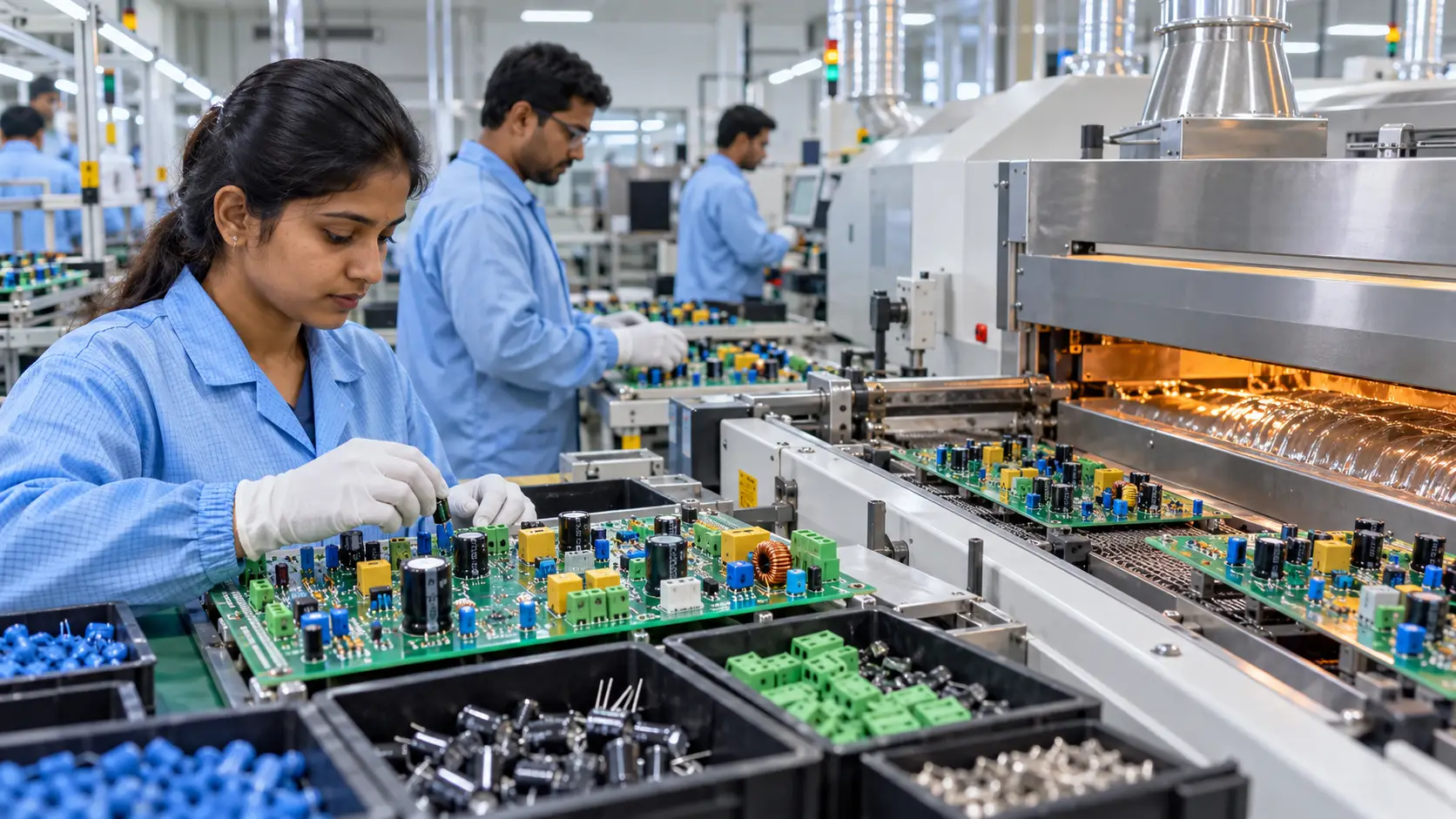
Electronics manufacturing has become an increasingly important part of India’s industrial and technology ecosystem. From mobile devices and IT hardware to telecommunications products and hearables and wearables, electronic products require coordinated manufacturing processes to move from product requirements to finished goods.
For many businesses, managing every stage of production internally requires significant investment in manufacturing infrastructure, engineering teams, equipment, quality systems and production management. Electronics Manufacturing Services (EMS) provide an alternative by allowing businesses to work with specialised manufacturing partners that support selected or multiple stages of electronics production.
In India, the growth of electronics production has increased the need for manufacturing partners with the infrastructure and capabilities required to support different product categories and production requirements. This guide explains what EMS means, what an EMS company does, the key capabilities involved and how businesses can evaluate an electronics manufacturing partner.
What Are Electronics Manufacturing Services?
Electronics Manufacturing Services are manufacturing services provided by a specialised company to help businesses produce electronic products. Depending on the product and manufacturing requirements, an EMS company can support activities such as PCB assembly, component insertion, testing, final assembly and packaging.
The scope of EMS can vary from one manufacturing partner to another. Some companies may specialise in specific assembly processes, while others provide capabilities across multiple stages of the electronics manufacturing lifecycle.
The objective is to provide the manufacturing infrastructure, processes and technical resources required to convert product requirements into consistent production.
What Does an EMS Company Do?
An EMS company supports the manufacturing side of an electronic product. Its role can involve production preparation, electronics assembly, testing, final assembly and other manufacturing activities depending on its capabilities.
A typical electronics manufacturing workflow can involve several connected stages:
- New Product Introduction: Preparing the product, manufacturing process and production requirements before regular production.
- PCB Assembly: Assembling electronic components onto printed circuit boards using applicable assembly technologies.
- Component Insertion: Handling components that require manual or specific insertion processes.
- Testing: Checking assembled boards or products according to the applicable manufacturing and product requirements.
- Final Assembly: Bringing the required components and assemblies together to complete the product.
- Packaging: Preparing finished products for shipment and the next stage of the supply chain.
The exact manufacturing flow depends on the product design, components, assembly requirements and production volume.
Key Electronics Manufacturing Capabilities
Modern electronics production can require multiple manufacturing technologies. An EMS partner should have capabilities that match the requirements of the product rather than relying on a single assembly method.
Surface Mount Technology (SMT)
Surface Mount Technology (SMT) is a PCB assembly process in which electronic components are placed directly onto the surface of a printed circuit board. SMT supports automated component placement and is widely used for modern electronic assemblies, including boards containing chips and fine-pitch components.
Manual Insertion
Some components or PCB designs require manual handling during assembly. Manual Insertion allows selected components to be placed manually according to the requirements of the PCB and manufacturing process. It can be used alongside automated assembly for mixed-technology PCBs.
Final Assembly, Testing and Packaging
Final Assembly, Testing and Packaging (FATP) covers important stages after the relevant component and PCB assembly processes have been completed. These activities bring the product together, perform the required testing and prepare the finished product for packaging.
New Product Introduction
New Product Introduction (NPI) helps prepare a new product for manufacturing before it moves into regular production. It can involve product sample analysis, testing, SOP review, production planning, 4M assessment and identification of potential manufacturing risks.
How the EMS Manufacturing Process Works
The electronics manufacturing process varies according to the product, but it generally involves a sequence of connected manufacturing activities.
Production preparation establishes the manufacturing requirements. During NPI, the product and manufacturing process can be evaluated before regular production begins. PCB assembly then brings the required electronic components together using applicable technologies such as SMT and Manual Insertion.
After assembly, testing and inspection activities are carried out according to the requirements of the product and manufacturing process. The product can then proceed through final assembly and packaging before moving into the next stage of the supply chain.
Keeping these activities connected within a coordinated manufacturing environment can help businesses manage production requirements across different stages.
Benefits of Working with an EMS Company
Access to Manufacturing Infrastructure
Building an electronics manufacturing operation internally can require investment in production equipment, facilities, engineering resources and supporting infrastructure. Working with an EMS company can provide access to established manufacturing capabilities without requiring a business to build every production function independently.
Engineering and Manufacturing Expertise
Electronics production requires coordination between product requirements, manufacturing processes, equipment and production teams. An experienced manufacturing partner can provide engineering and production expertise across the stages it supports.
Flexible Production Support
Different products can require different assembly technologies and manufacturing processes. An EMS partner with multiple capabilities can support production requirements that involve a combination of automated assembly, manual insertion, testing and final assembly.
Integrated Manufacturing Processes
When multiple manufacturing stages are managed within a coordinated production environment, businesses can work with one manufacturing partner across relevant stages rather than managing every activity independently.
Support for Production Scale-Up
Manufacturing requirements can change as a product moves from introduction towards regular production. EMS capabilities can provide the infrastructure and production processes required to support manufacturing as production requirements develop.
Electronics Manufacturing Services in India
India’s expanding electronics ecosystem has created demand for manufacturing capabilities that can support a broad range of electronic products. Businesses evaluating electronics manufacturing services in India need to consider more than the availability of individual production processes.
Manufacturing infrastructure, engineering capabilities, quality processes, production technologies and experience with the relevant product category can all influence whether an EMS partner is suitable for a particular requirement.
OEL supports electronics manufacturing requirements across mobile devices, IT hardware, telecommunications, and hearables and wearables. Its manufacturing capabilities cover key stages including SMT, Manual Insertion, FATP and NPI.
How to Evaluate an EMS Company
Choosing an EMS company requires evaluating its capabilities against the actual requirements of the product. Important factors include:
- Manufacturing capabilities: Check whether the partner supports the assembly and production processes required by the product.
- Infrastructure: Evaluate the facilities, equipment and production environment available for manufacturing.
- Engineering support: Consider the technical and engineering resources available during production preparation and manufacturing.
- Quality processes: Understand how quality and compliance requirements are incorporated into manufacturing operations.
- Production requirements: Assess whether the manufacturing setup can support the required production volume and process requirements.
- Product experience: Consider whether the manufacturer has relevant experience across the product category being manufactured.
A suitable EMS partner should be evaluated according to the specific manufacturing requirements of the product rather than simply by the number of services it offers.
OEL’s Electronics Manufacturing Services
Optiemus Electronics Limited (OEL) provides electronics manufacturing services supported by manufacturing infrastructure, engineering expertise and production capabilities across key stages of electronics production.
OEL’s capabilities include Surface Mount Technology, Manual Insertion, Final Assembly, Testing and Packaging, and New Product Introduction. These capabilities support manufacturing requirements across mobile devices, IT hardware, telecommunications, and hearables and wearables.
OEL also maintains dedicated infrastructure supporting different stages of electronics production. Businesses can explore the broader electronics manufacturing infrastructure to understand the manufacturing environment supporting these capabilities.
Frequently Asked Questions
What is an EMS company?
An EMS company is a specialised electronics manufacturing provider that supports businesses with the production of electronic products. Depending on its capabilities, an EMS company can provide services such as PCB assembly, component insertion, testing, final assembly and packaging.
What are the main electronics manufacturing services?
Common electronics manufacturing services include New Product Introduction, PCB assembly, Surface Mount Technology, Manual Insertion, testing, final assembly and packaging. The exact services available depend on the manufacturing partner.
Why do companies use electronics manufacturing services?
Companies can use EMS providers to access established manufacturing infrastructure, engineering resources and production capabilities without building every manufacturing function internally.
What should I look for in an EMS company in India?
Businesses should consider manufacturing capabilities, infrastructure, engineering support, quality processes, production requirements and experience relevant to their product category when evaluating an EMS company in India.
Does OEL provide electronics manufacturing services in India?
Yes. OEL provides electronics manufacturing services in India across key manufacturing stages including SMT, Manual Insertion, FATP and NPI, supporting products across mobile devices, IT hardware, telecommunications, and hearables and wearables.
Conclusion
Electronics Manufacturing Services provide businesses with access to specialised manufacturing capabilities and infrastructure required to produce electronic products. From New Product Introduction and PCB assembly to testing, final assembly and packaging, the right combination of manufacturing processes depends on the product and its production requirements.
For businesses evaluating electronics manufacturing companies in India, the focus should be on finding a manufacturing partner whose capabilities, infrastructure, engineering resources and quality processes align with the specific requirements of the product.
OEL brings together multiple electronics manufacturing capabilities to support products across different electronics categories and stages of production.