
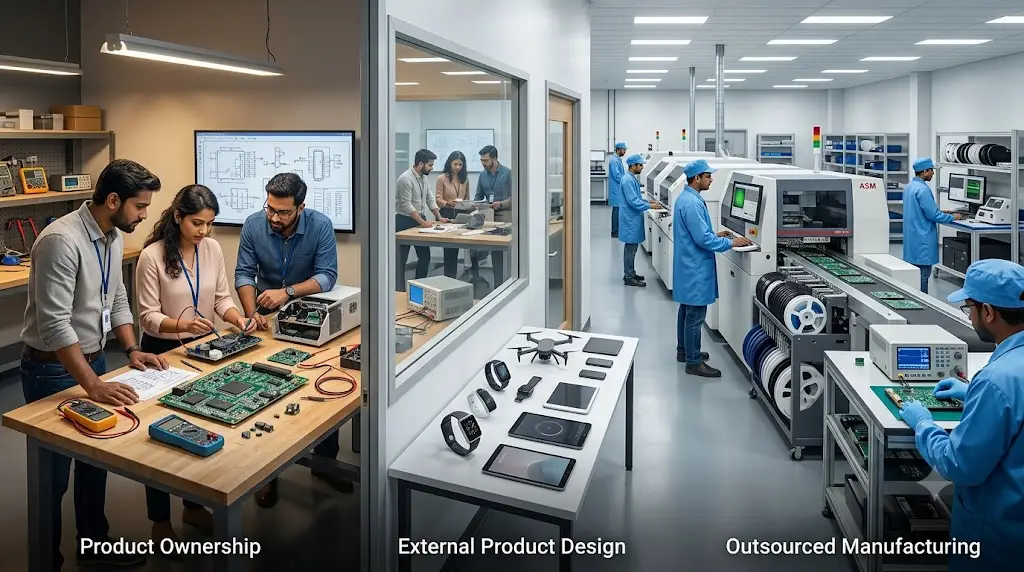
A working prototype is an important milestone in electronics product development, but it does not prove that the product is ready for mass production.
A prototype may be assembled carefully in small quantities, use specially sourced components and receive significant engineering attention. Volume manufacturing is different. The same product must be produced repeatedly using controlled materials, defined processes, available equipment, trained people and reliable inspection and testing.
The structured process of preparing a new product and its manufacturing system for production is commonly known as New Product Introduction, or NPI.
In electronics manufacturing, the NPI process helps convert a functional product design into a manufacturing process that can be repeated consistently at the required production volume. It brings product engineering, manufacturing engineering, sourcing, quality, testing and production teams together before full-scale manufacturing begins.
This guide explains what NPI means in electronics manufacturing, how the process typically moves from prototype to mass production, what should be validated at each stage and what OEMs should evaluate before approving a product for volume manufacturing.
What Is NPI in Electronics Manufacturing?
NPI stands for New Product Introduction.
It is the structured process used to prepare a new or significantly changed electronic product for manufacturing.
The exact NPI workflow varies between companies and products, but it commonly includes activities such as:
- Reviewing the released product design and manufacturing data
- Checking manufacturability and assembly requirements
- Validating the Bill of Materials (BOM)
- Planning sourcing and material availability
- Building and evaluating initial units
- Defining manufacturing processes and work instructions
- Preparing tooling, fixtures and test requirements
- Running pilot production
- Investigating defects and process risks
- Confirming readiness before production ramp-up
The objective is not simply to prove that one product can be built. It is to establish whether the product can be built repeatedly under a controlled manufacturing process.
Why a Working Prototype Is Not the Same as Production Readiness
This distinction is one of the most important concepts in hardware manufacturing.
A prototype primarily answers:
Does the product work?
NPI needs to answer a much broader set of questions:
- Can the product be assembled repeatedly?
- Are the required components available at the planned volume?
- Can existing manufacturing equipment handle the design?
- Are assembly instructions clear?
- Can critical functions be tested efficiently?
- Can defects be identified and traced?
- Can production output increase without creating uncontrolled variation?
A hand-built prototype can therefore be technically successful while the manufacturing process around it is still immature.
This is exactly the gap the NPI process is intended to close.
NPI vs Prototyping: What Is the Difference?
| Area | Prototyping | NPI |
| Main objective | Demonstrate and evaluate the product design | Prepare the product and manufacturing process for repeatable production |
| Typical volume | Very small quantities | Engineering, validation and pilot quantities before scale-up |
| Primary focus | Product functionality and design learning | Manufacturability, materials, process, testing and production readiness |
| Process maturity | Can involve temporary or highly manual methods | Moves towards controlled, documented and repeatable processes |
| Outcome | Validated prototype or design iteration | Manufacturing process sufficiently validated for production ramp-up |
What Is the Difference Between NPI and NPD?
New Product Development (NPD) and New Product Introduction (NPI) overlap, but they are not identical.
NPD is the broader product-development journey. It can include product concept, requirements, electronic design, mechanical design, software, prototype development and product validation.
NPI focuses more specifically on preparing the new product for manufacturing and introducing it into the production environment.
The boundary varies between organisations, but a useful way to think about it is:
NPD determines what the product should be. NPI determines how the approved product will be manufactured repeatedly.
Typical NPI Process in Electronics Manufacturing
NPI should be treated as a sequence of controlled decisions rather than one large jump from prototype to mass production.
1. Product and Manufacturing Data Review
The manufacturing team first needs an accurate and controlled product-data package.
Depending on the product, this may include:
- PCB fabrication data
- Assembly drawings
- Bill of Materials
- Component specifications
- Mechanical drawings
- Firmware or programming requirements
- Test requirements
- Packaging requirements
- Approved product revisions
Version control matters. Manufacturing against an outdated BOM, PCB revision or software build can invalidate the results of an otherwise well-run production trial.
2. Manufacturability Review
The next question is whether the design can be manufactured using the intended processes.
Manufacturing engineers may review areas such as:
- PCB assembly requirements
- Component placement and accessibility
- Surface-mount and through-hole requirements
- Soldering process compatibility
- Mechanical assembly sequence
- Inspection accessibility
- Programming and test access
- Tooling or fixture requirements
This type of Design for Manufacturability (DFM) review can identify design characteristics that may be difficult, inconsistent or unnecessarily complex to manufacture.
The goal is not to redesign the product without the OEM’s approval. It is to identify manufacturing risks early enough for the appropriate engineering team to evaluate them.
3. BOM and Component Availability Review
A product cannot move into stable production if critical components cannot be sourced reliably.
The BOM therefore needs to be evaluated not only for correctness but also for manufacturing practicality.
Questions can include:
- Are manufacturer part numbers clearly defined?
- Are required components available at the expected volumes?
- Do any components have unusually long lead times?
- Are approved alternates available where appropriate?
- Are there lifecycle or obsolescence concerns?
- Are storage or handling requirements understood?
Any proposed component substitution should follow the OEM’s approved engineering and change-control process rather than being treated as an informal purchasing decision.
4. Manufacturing Process Planning
Once the product and materials are understood, the manufacturing route needs to be defined.
For an electronics product, that route may combine several processes.
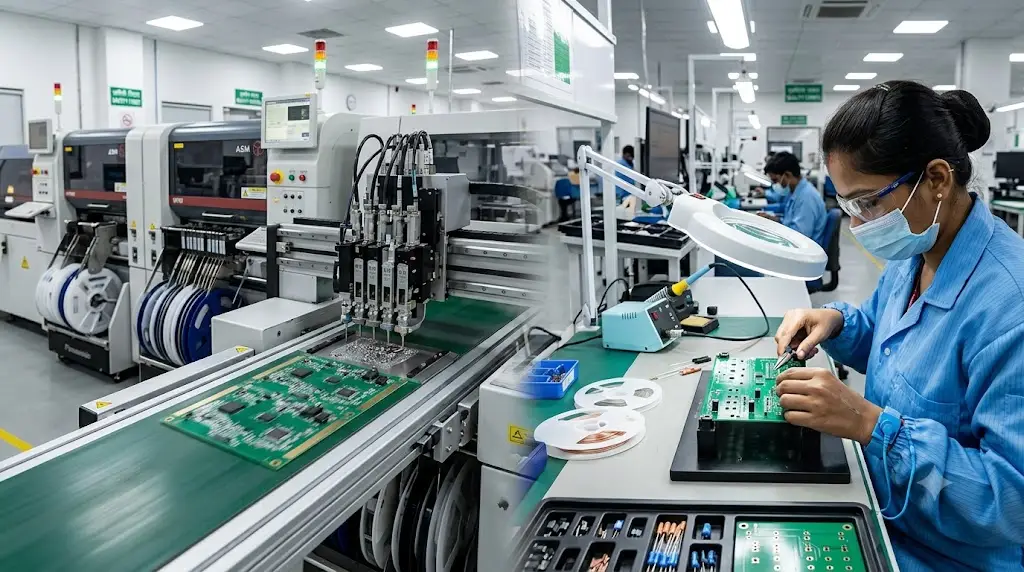
A PCBA could pass through Surface Mount Technology (SMT) assembly, followed by manual or through-hole insertion for components that require it.
The wider process may then include:
- PCB assembly
- Inspection
- Programming
- Mechanical assembly
- Functional testing
- Final inspection
- Packaging
Work instructions, process parameters, equipment requirements and responsibility at each stage should become increasingly clear before pilot production begins.
5. Tooling, Fixtures and Test Preparation
Prototype builds can sometimes depend heavily on engineering judgement. Volume manufacturing needs a more controlled approach.
Depending on the product, production may require:
- Assembly fixtures
- Programming equipment
- Functional test fixtures
- Mechanical jigs
- Inspection aids
- Packaging fixtures or defined packing methods
Test preparation is particularly important because a production line needs an efficient way to determine whether each unit meets the defined manufacturing and functional requirements.
6. Initial or Engineering Build
The first controlled build provides manufacturing feedback that may not appear during laboratory prototyping.
Teams can observe:
- Whether assembly instructions are clear
- Whether operators can access components correctly
- How the product behaves under the intended production process
- Whether fixtures work as expected
- Whether the test process detects relevant issues
- Whether the estimated production sequence is realistic
Problems discovered during this stage should be documented rather than solved only through informal operator experience.
7. Defect Analysis and Corrective Action
Finding defects during NPI is not necessarily a sign that the process has failed.
The purpose of NPI is partly to expose issues before they are multiplied across a much larger production run.
When an issue is identified, teams need to understand whether the root cause relates to:
- Product design
- Component variation
- Manufacturing method
- Equipment
- Material handling
- Work instructions
- Programming
- Testing
The corrective action should then be validated in a subsequent build or controlled production step where necessary.
8. Pilot Production
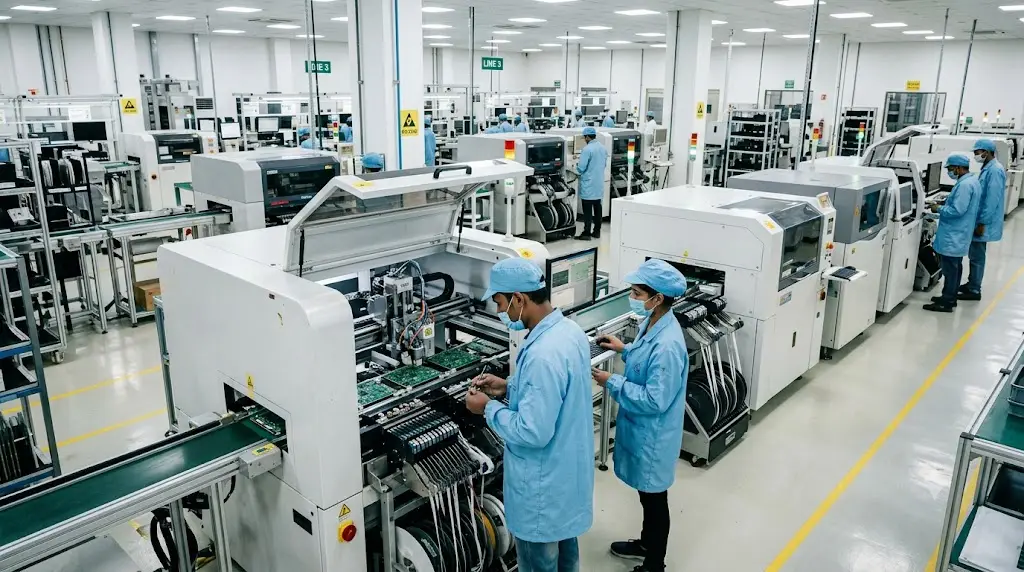
A pilot build moves the product closer to the conditions expected during regular manufacturing.
Unlike an engineering prototype, the pilot should increasingly use:
- Production-intent materials
- Production equipment
- Defined work instructions
- Actual inspection methods
- Production test procedures
- Planned manufacturing personnel
The purpose is to validate the manufacturing system, not merely the product.
A successful pilot should provide evidence that the process is sufficiently controlled to begin a production ramp, subject to the product’s agreed acceptance criteria.
What Are EVT, DVT and PVT?
Hardware teams may also use terms such as EVT, DVT and PVT during product industrialisation.
- EVT — Engineering Validation Test: commonly focuses on whether the engineering design functions as intended.
- DVT — Design Validation Test: commonly focuses on validating the more mature product design against defined requirements.
- PVT — Production Validation Test: commonly focuses on validating the product using production-intent processes and equipment.
These labels are widely used in hardware development, but they are not universal. Different companies may define stage names, deliverables and approval gates differently.
For OEMs working with an EMS partner, the more important question is what must be proven at each stage before the project is authorised to move forward.
The 4M Framework in Manufacturing Readiness
One useful way to assess manufacturing readiness is through the four core production elements often referred to as the 4M framework:
| 4M Element | NPI Question |
| Man | Are the required people, skills and training available? |
| Machine | Can the required equipment support the product and expected output? |
| Method | Is there a defined and repeatable manufacturing process? |
| Material | Are the required components and materials defined and available? |
OEL’s own New Product Introduction services considers the 4M framework—Man, Machine, Method and Material—when evaluating manufacturing readiness and production output. Manufacturing readiness also depends on factors such as line capacity, equipment availability, manpower, BOM readiness and ramp-up planning.
This is important because production readiness depends on the interaction of all four factors. A technically manufacturable product can still face problems if materials are unavailable, equipment capacity is insufficient or the process depends on skills that have not been prepared for the required volume.
How Does NPI Move Into Mass Production?
Mass production should begin when the manufacturing process has demonstrated sufficient readiness against the project’s agreed requirements.
A production-release review may consider whether:
- The approved product revision is clearly defined
- The BOM is released and material risks are understood
- The manufacturing route has been documented
- Required equipment and fixtures are available
- Inspection and testing methods are ready
- Known pilot-build issues have been addressed
- Production personnel are prepared
- Expected capacity and ramp-up requirements are understood
The transition is generally better viewed as a ramp rather than an instant switch frompilot quantities to full production volumes.
Early production quantities allow teams to continue monitoring the manufacturing process while volume gradually increases.
What Can Go Wrong During NPI?
Most NPI problems are not caused by one dramatic failure. They usually emerge from several smaller assumptions that were never validated.
Incomplete Manufacturing Data
Missing component specifications, conflicting revisions or unclear assembly instructions create uncertainty on the production floor.
BOM Problems Discovered Too Late
A design may depend on a component that becomes difficult to source at the required quantity or lead time.
Prototype Processes That Cannot Scale
A method that works when an engineer carefully assembles five units may be too slow or variable for regular production.
Insufficient Test Coverage
If important failure conditions cannot be detected efficiently during manufacturing, defective units may progress further through assembly before the problem is discovered.
Late Design Changes
Changes made after tooling, test fixtures or manufacturing documentation have been prepared can create rework across several parts of the production system.
Unclear Approval Responsibility
OEM and manufacturing teams should know who has authority to approve design changes, material substitutions, process deviations and production release.
What Should OEMs Provide to an EMS Partner for NPI?
The exact data package depends on the product, but an EMS partner generally needs enough controlled information to understand what must be built and how the result will be evaluated.
This may include:
- Released PCB and mechanical design data
- Bill of Materials
- Approved manufacturer part information
- Assembly drawings
- Firmware or programming files where applicable
- Functional and test requirements
- Quality requirements
- Packaging specifications
- Production forecasts
- Required regulatory or product-specific documentation
The cleaner the engineering handoff, the easier it becomes to separate real manufacturing issues from simple documentation gaps.
How Should You Evaluate an NPI Manufacturing Partner?
An OEM should look beyond whether the manufacturer can build a few prototypes.
Useful questions include:
- How does the manufacturer review a new design before production?
- How are BOM and component risks handled?
- Can it support both SMT and required manual assembly processes?
- How are manufacturing issues documented and communicated?
- How are test fixtures and manufacturing tests prepared?
- What happens between an engineering build and a pilot run?
- How is production capacity evaluated?
- How are process changes controlled?
- How does the team determine readiness for volume production?
For products that require multiple manufacturing stages, it can also be useful to evaluate whether the partner can support the broader electronics manufacturing process from PCB assembly through testing and final product preparation.
Where Does Final Assembly and Testing Fit Into NPI?
NPI does not necessarily end after a PCB has been populated successfully.
For complete electronic products, manufacturing readiness may also need to validate:
- Mechanical integration
- Software or firmware loading
- Functional testing
- Final inspection
- Packaging
These later production stages need to be considered because a product that passes PCBA assembly can still encounter issues during final integration or test.
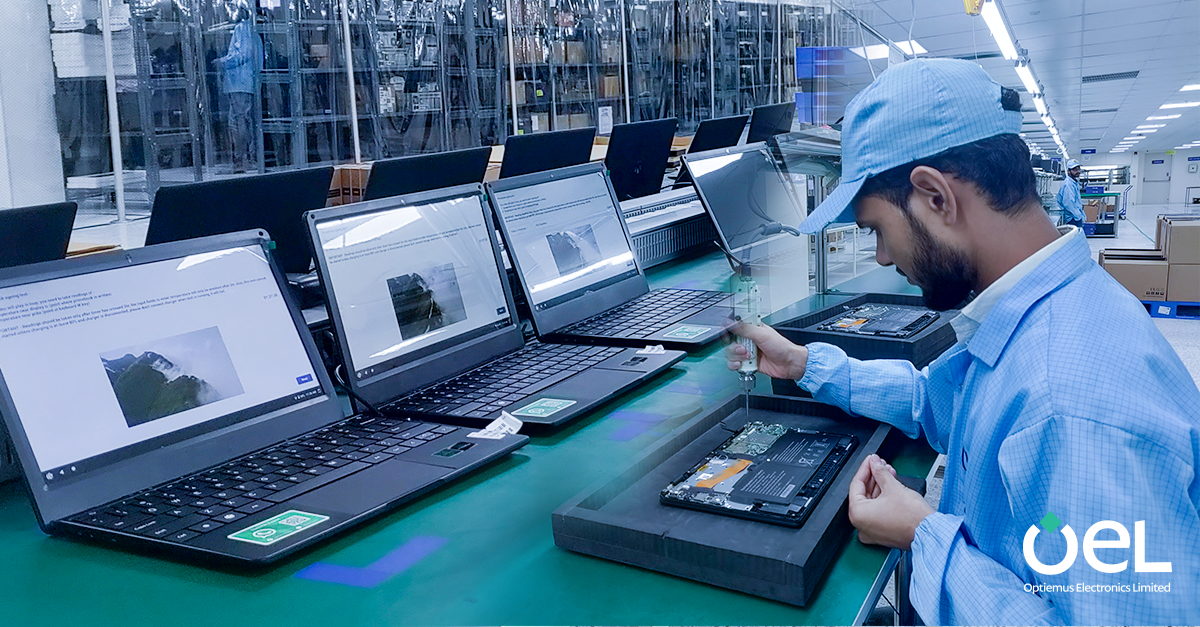
OEL’s Final Assembly, Testing and Packaging capabilities support the downstream manufacturing stages after PCB assembly and component integration.
Why NPI Is a Manufacturing Discipline, Not Just a Project Milestone
NPI is sometimes treated as a date on a project plan: prototype complete, NPI complete, production starts.
In practice, it is more useful to treat NPI as a process for reducing uncertainty.
At the beginning, the engineering team may know that the product works but still have unanswered questions around materials, process, test, equipment and capacity.
Each NPI build should reduce those unknowns until the manufacturing process is controlled enough to support the planned production ramp.
The best outcome is therefore not simply a successful pilot batch. It is a production system that teams understand, can monitor and can repeat.
Conclusion
The transition from prototype to mass production is one of the most important stages in electronics manufacturing.
A working prototype proves that a product can function. The NPI process determines whether that product can be manufactured repeatedly using defined materials, equipment, processes, people, inspection and testing.
A disciplined NPI programme typically reviews the product data, manufacturability, BOM, sourcing, production processes, tooling, testing, pilot builds, defects and production capacity before volume manufacturing begins.
For OEMs, involving manufacturing expertise before the final production ramp can help surface practical issues while there is still time to address them in a controlled manner.
The goal is simple: move from “we can build this product” to “we have a controlled process for building this product repeatedly.”
Frequently Asked Questions
What does NPI mean in manufacturing?
NPI stands for New Product Introduction. In manufacturing, it is the structured process used to prepare a new product and its production process for repeatable manufacturing and eventual volume production.
What is the NPI process in electronics manufacturing?
The electronics NPI process commonly includes manufacturing-data review, manufacturability assessment, BOM and sourcing review, process planning, tooling and test preparation, initial builds, defect analysis, pilot production and final production-readiness approval.
What is the difference between NPI and a prototype?
A prototype is primarily used to evaluate whether the product design works. NPI prepares the product and manufacturing system so that the design can be produced repeatedly under controlled production conditions.
What is the difference between NPI and NPD?
New Product Development covers the broader creation and validation of the product, while New Product Introduction focuses more specifically on introducing the approved product into a repeatable manufacturing process.
What are the 4Ms in NPI?
The 4Ms are Man, Machine, Method and Material. Together, they provide a practical framework for evaluating whether people, equipment, processes and materials are ready to support production.
What is a pilot build in NPI?
A pilot build is a controlled production run used to evaluate the product using processes, materials, equipment, inspection and testing that increasingly resemble the intended volume-production environment.
When is a product ready for mass production?
A product is generally ready to move toward mass production when the approved design and BOM are controlled, manufacturing and test processes are defined, known pilot-build issues have been addressed, required materials and equipment are available, and the agreed production-readiness criteria have been met.
Why should an EMS partner be involved during NPI?
An EMS partner can provide manufacturing input around assembly processes, materials, tooling, testing, production capacity and process readiness. The appropriate level of involvement depends on the responsibilities agreed between the OEM and the manufacturer.